Loading…
N 35°18′ · E 75°37′
For Photographers
Photography Tours in Baltistan
Slower pacing. Earlier starts. Routing timed to the light. Skardu and Hunza are extraordinary subjects. We make sure you're there at the right moment.
How We Approach Photography Trips
Built differently from
a standard tour.
Standard tours move on a fixed schedule that is optimised for covering ground, not for light. Photography trips require the opposite: being in the right place at the right hour, staying longer when the conditions are exceptional, and leaving earlier than comfortable to catch the pre-dawn colour over Rakaposhi.
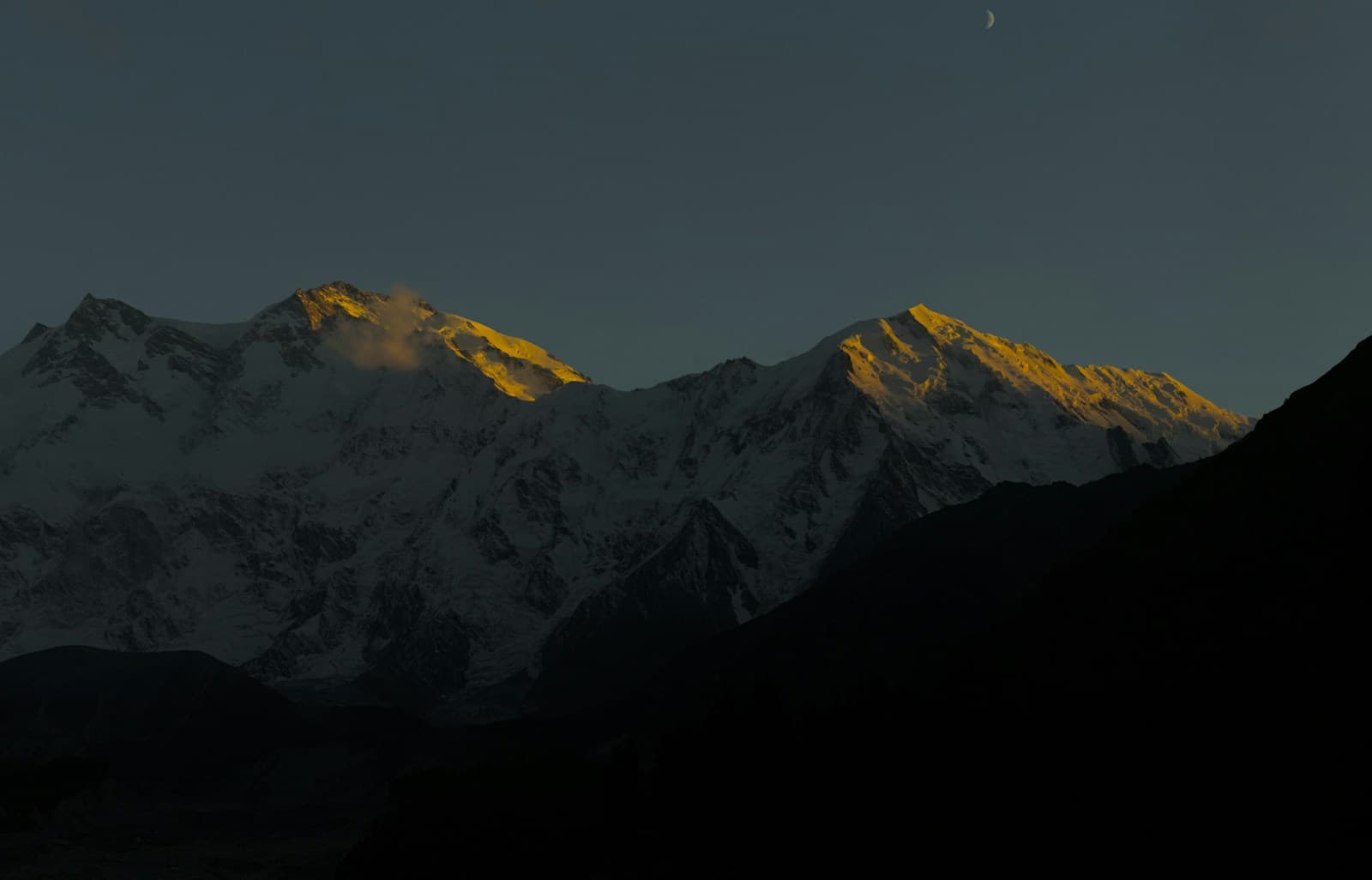
Raahi builds photography itineraries around the light calendar, not the tourist schedule. We know which viewpoints face east (morning light), which face west (evening light), and which like the cold desert at Shigar are best in the long shadows of late afternoon.
Mubarik has been asked by photographers more times than he can count where to go for specific shots. He has strong opinions about this and is happy to share them. The suggestions he makes are the ones you'd never find in a guidebook.
Prime Locations
Photography locations
in Baltistan.
Shigar Fort: Morning and Evening
The fort faces southwest: early morning gives cool blue light on the stone walls, late afternoon gives the warm golden hour that makes the fort glow. The garden inside is a separate world: carved wooden arches, roses, the sound of the river. Most photographers want two sessions here.
Sarfaranga Cold Desert: Late Afternoon
Sand dunes with permanent snowfields behind them. The afternoon light angles across the dune faces and creates shadows that make the texture visible. The colour contrast between sand and snow photographs almost unreal.
Kharpocho Fort Panorama
From the fort above Skardu, the Indus River valley spreads below in both directions. At golden hour, the haze lifts, the shadows lengthen, and the view takes on the quality of a painting. The climb up is 20 minutes: the light window is shorter.
Eagle's Nest, Hunza: Sunrise and Sunset
At 3,100m above Karimabad, this viewpoint has five mountain ranges visible simultaneously. Sunrise here with Rakaposhi catching the first light while the valley is still in shadow is one of Pakistan's most recognisable images. Worth the 4am drive.
Attabad Lake: Midday Colour
The turquoise lake is most vivid in full overhead light, which is counterintuitive for photography but true here: the colour is from the water itself, not reflected sky. Shoot from the high road above the lake for scale and composition.
Deosai: Wildflowers and Sky
The wildflower plateau in July-August. Wide-angle landscape work with the flowers in the foreground and the peaks behind. At 4,100m, the sky is a deeper blue than any altitude you're used to. The Milky Way from Deosai overnight is in a class of its own.
FAQ
Your questions
answered honestly.
What is the best time for landscape photography in Skardu?
June to September offers the most reliable light and the widest variety of subjects: wildflowers on Deosai, green terraces in Hunza, and long summer golden hours. October is exceptional for colour and low-angle light but some roads close. April in Hunza is the blossom season. We plan photography itineraries around the specific subjects and light conditions you are after.
Is astrophotography possible in Skardu or Deosai?
Yes. Both Skardu (2,400m) and Deosai (4,100m) have minimal light pollution and very clear skies in summer. Deosai is exceptional for Milky Way photography: the sky at 4,100m is noticeably different from any lower altitude. July and August offer the best combination of clear nights and accessible roads. Raahi can arrange overnight stays on Deosai specifically for astrophotography.
What equipment is recommended for a Baltistan photography trip?
A wide-angle lens (16-35mm equivalent) for landscapes and interiors. A telephoto lens (100-400mm equivalent) for wildlife in Deosai and compressed mountain shots. A sturdy tripod for golden hour and astrophotography. Dust and moisture protection: Baltistan is dry but gritty. Extra batteries for cold mornings at altitude. A 4x4 vehicle means you can carry substantial equipment without weight constraints.
Can I get permits for photography in restricted areas?
Permits are required for photography in certain sensitive areas near the Line of Control and on some military routes. For standard landscape photography in tourist areas including Deosai, Shigar, Hunza, and the main Skardu circuit, no special permit is needed. Raahi advises on permit requirements for specific locations.
Ready?
Plan your
photography trip.
Tell us your target shots, season preference, and how long you have. We'll build a route timed to the best light.