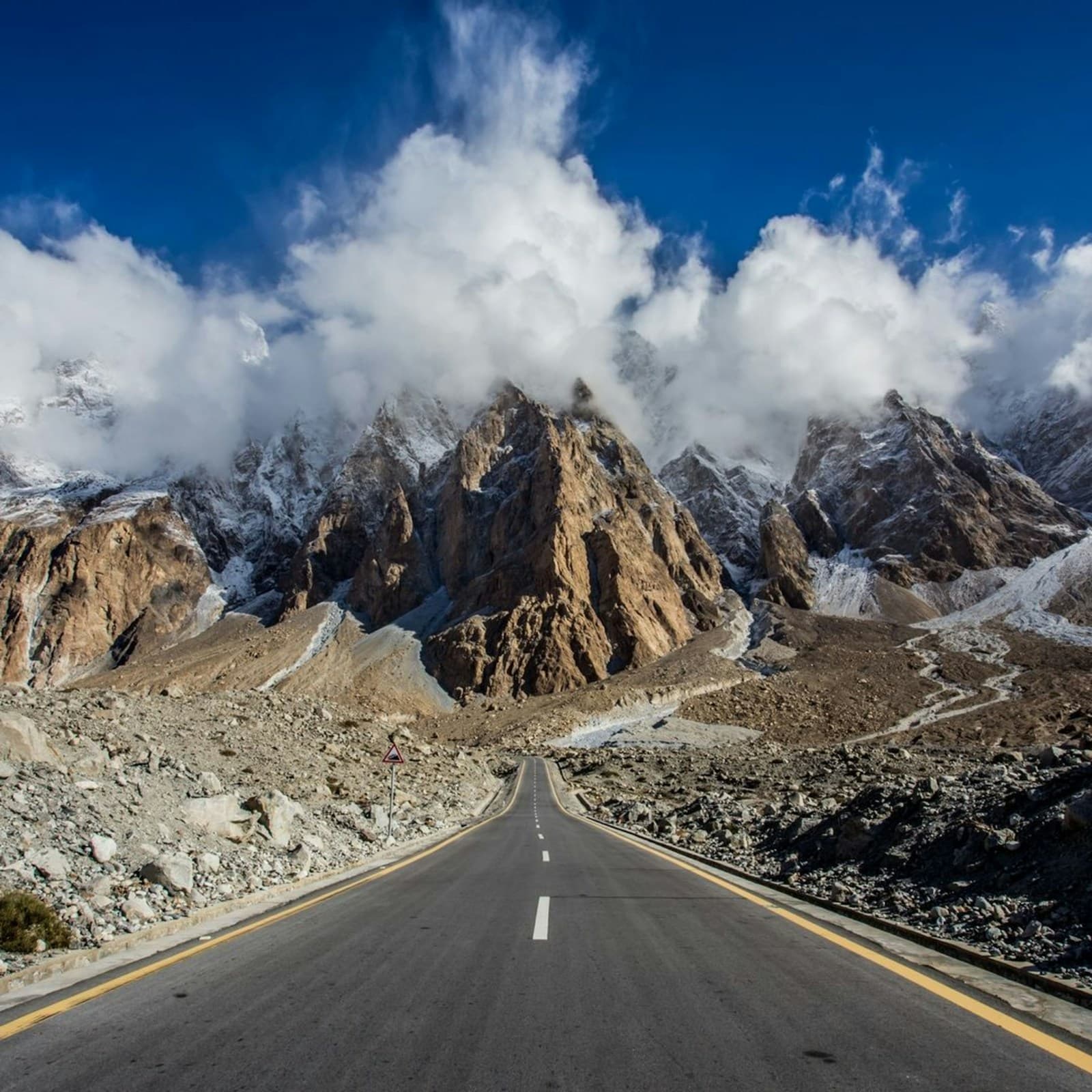
Gilgit-Baltistan is a road trip destination in the most literal sense. The drives between valleys are often as memorable as the destinations themselves: the Indus cutting through canyon walls, the Karakoram Highway threading between faces that rise to 7,000 metres, the Shyok River running beside the road for hours at a time.
This is a 10-day route that covers the core of Skardu district before looping through Khaplu and returning via the KKH to Hunza. It is the route we recommend to travellers who have 10 days and want depth rather than a checklist.
Before you start: getting to Skardu
The trip starts in Skardu. Fly from Islamabad (45 minutes, daily PIA service, weather-dependent) or drive the Karakoram Highway and Indus Highway from Islamabad (12 to 14 hours). Flying saves two days of driving. The road journey is worth doing once in either direction but is not practical for every trip.
Planning a trip to Skardu?
Private 4×4, boutique hotels, and a day-by-day itinerary built around what you want to see.
Free PDF with the daily breakdown, hotels, costs, and the routes we use. No spam. Unsubscribe in one click.
Day 1-2: Skardu city and surroundings
Arrive in Skardu and acclimatise. At 2,400 metres, Skardu is not high enough to cause serious altitude problems but a day at this elevation before going to Deosai (4,100 metres) is sensible.
Day 1: Kharpocho Fort in the morning (20-minute climb, full valley views), Satpara Lake in the afternoon, dinner in town. Day 2: Upper and Lower Kachura Lakes. The upper lake is quieter and more dramatic; the lower (Shangrila) is more developed. Both are worth seeing.
Day 3: Shigar Valley
Drive east from Skardu to Shigar Valley (30 minutes). Spend the morning at Shigar Fort Palace: even if not staying overnight, the fort museum and Mughal garden are open to visitors. Drive on to the Sarfaranga Cold Desert in the afternoon: sand dunes at 2,500 metres with permanent snowfields above them. Return to Skardu or stay overnight in Shigar (strongly recommended for those who have booked the fort palace).
Day 4: Deosai National Park
A full day. The drive from Skardu to the Deosai plateau takes around 2 hours, climbing from 2,400 to 4,100 metres through a dramatic glacial valley. Spend 5 to 6 hours on the plateau: Sheosar Lake, the wildflower grasslands (July to August), brown bear viewing from the car. Return to Skardu. This day requires an early start and a proper 4x4.
Day 5-6: Khaplu and Hushe Valley
Drive from Skardu to Khaplu along the Shyok River (110 kilometres, about 3 hours). The road follows the river through canyon terrain for most of the journey. Check into Khaplu Palace for one or two nights: this is the least-visited of the three Serena heritage properties and consistently the one guests find most peaceful.
Day 5 afternoon: Khaplu old town, Chaqchan Mosque (one of Pakistan's oldest, dating to 1370), the view from the palace terrace at golden hour. Day 6: drive up the Hushe Valley (about 60 kilometres, 2 to 3 hours). The road ends at Hushe village at 3,150 metres, base for K6, K7, and Gondogoro La expeditions. Non-trekkers find the drive itself remarkable. Return to Khaplu for the night.
Day 7: Drive to Gilgit
Khaplu to Gilgit is a long day: roughly 5 to 6 hours via Skardu. The alternative is to break it with a night in Skardu, which we recommend for those who are not yet tired of the Indus Valley scenery. Drive the Karakoram Highway section from Skardu to Gilgit: this stretch passes through some of the most dramatic gorge scenery in the range.
Day 8-9: Hunza Valley
Drive from Gilgit to Karimabad in Hunza (about 2.5 hours on the KKH). Two nights here covers the main circuit: Baltit Fort, Altit Fort, Attabad Lake boat trip, Eagle's Nest viewpoint for sunrise or sunset, Rakaposhi viewpoint at Minapin. If time allows and the road is open, a half-day to Passu (80 kilometres north) for the Passu Cones viewpoint is worth it.
Day 10: Drive to Islamabad or fly
Hunza to Islamabad by road is approximately 14 to 16 hours via the KKH. It is a genuinely great drive but long. Most travellers prefer to arrange the drive as an overnight with a stop in Besham or Abbottabad. Some fly: the nearest airport is Gilgit (2 hours back from Karimabad), with flights to Islamabad subject to the same weather as Skardu.
Road conditions and what you need
This route requires a proper 4x4 with an experienced local driver. The Skardu-Deosai road, the Shyok River road to Khaplu, and the Hushe Valley track are all rough and unsuitable for standard cars or inexperienced drivers. The KKH sections (Gilgit to Hunza, Islamabad to Gilgit) are paved and straightforward.
Best season for this complete circuit: June to October. The Deosai road opens by mid-June. Khaplu and Hushe Valley are accessible June through September. October is fine for all sections but check Deosai road status: it can close early in a heavy snowfall year.
For the Baltistan section day by day, the 7-day Skardu itinerary covers timing and sequencing in detail. The Karakoram Highway guide explains the KKH sections between Gilgit and Hunza. Raahi runs private versions of this route throughout the season. Our Do Wadiyan itinerary covers this exact 10-day circuit: Skardu, Shigar, Deosai, Khaplu, and Hunza in one trip. Tell us your dates and we will adjust the pacing around what is currently accessible. Plan your Baltistan road trip.
Frequently Asked Questions
How many days do you need for a Baltistan road trip?
Seven to ten days covers the full circuit: Skardu, Shigar Valley, the cold desert, Khaplu, and Deosai. Five days is possible but rushed. Ten days gives you overnight stops in Shigar and Khaplu plus a full Deosai day without cutting anything short. The Aangan Retreat (7-day tour) is built around this structure with a private 4x4 throughout.
Do you need a 4x4 for a Baltistan road trip?
Yes. Deosai's access road requires a proper 4x4. The Skardu to Khaplu route is rough in sections along the Shyok River. The Sarfaranga Cold Desert approach in Shigar Valley is sand. Attempting a Baltistan road trip in a standard saloon car would exclude Deosai entirely and make the Khaplu drive uncomfortable. A Land Cruiser Prado or similar is the standard vehicle for this itinerary.
What is the best time for a Baltistan road trip?
June through September, with September our strongest recommendation: harvest season in the agricultural valleys, lower crowds than July to August, and Deosai still reliably open. October is possible but Deosai may close with the first heavy snowfall, check conditions before committing to the Deosai leg if travelling late in the season.