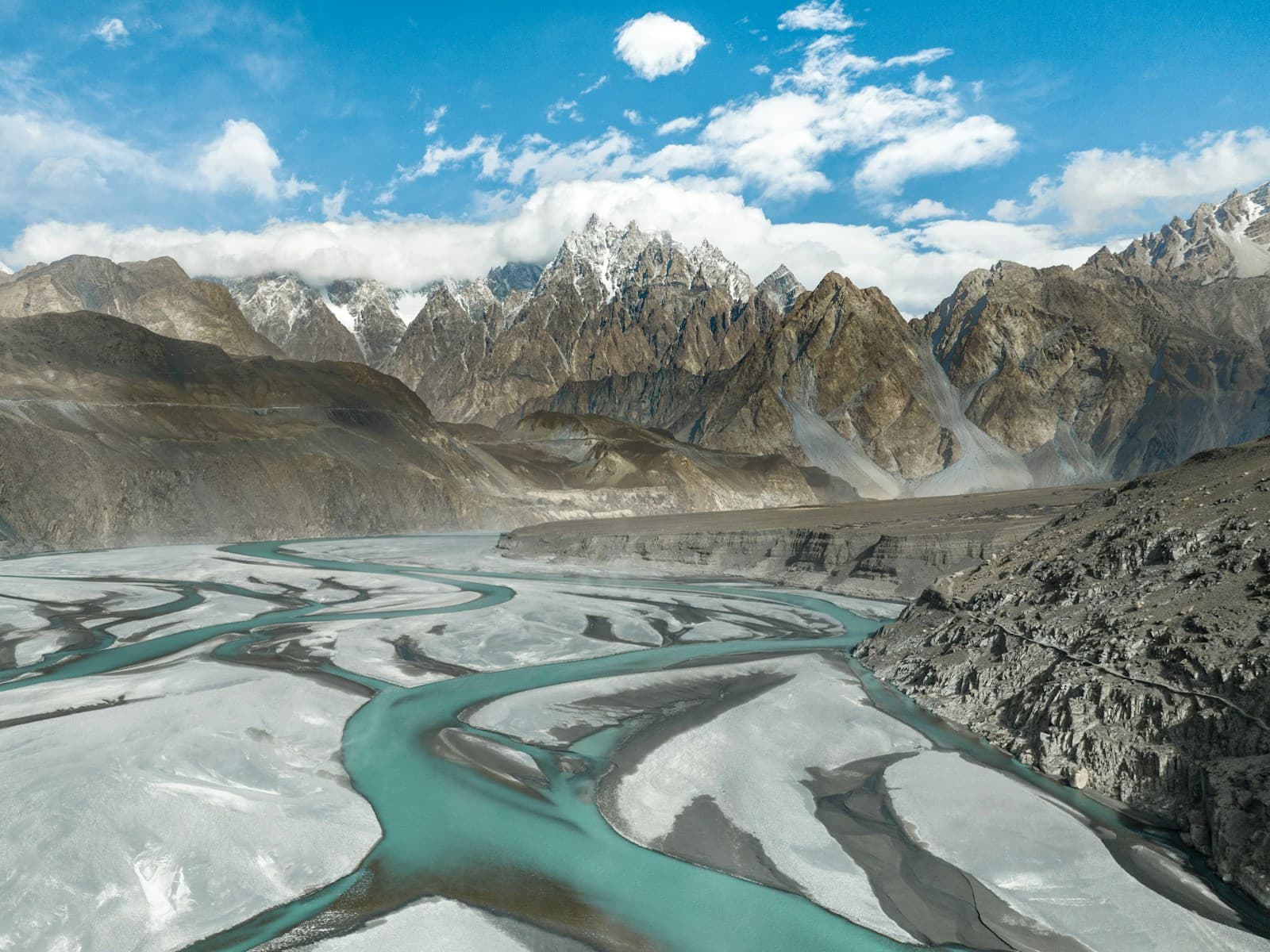
Fairy Meadows is a high-altitude meadow at 3,300 metres, sitting directly beneath the Raikot Face of Nanga Parbat (8,126m). Looking up from the meadow, you see nearly 5,000 vertical metres of mountain wall rising above you in a single unbroken face. It is one of the most viscerally dramatic views in the Karakoram and arguably the most accessible high-altitude mountain view in Pakistan.
What Fairy Meadows actually is
Fairy Meadows is a flat alpine meadow about 1.5 kilometres long, ringed by pine forest, with Nanga Parbat's north face dominating the entire southern skyline. In summer it is green and carpeted with wildflowers. In spring and autumn the surrounding forest provides colour. The meadow has basic guesthouses and a tented camp area for trekkers continuing to Nanga Parbat Base Camp.
The name is colonial-era German: the first European mountaineers to explore this area in the 1930s called it Märchenwiese (Fairy Meadow), and the name stuck. It is still sometimes called that in German-language mountain literature.
Ready to plan your trip?
Tell us where you want to go and how long you have. We build the itinerary around what matters to you.
Free PDF with the daily breakdown, hotels, costs, and the routes we use. No spam. Unsubscribe in one click.
Getting to Fairy Meadows
The approach has two stages:
Stage 1: Raikot Bridge to Tato Village by jeep. The KKH passes Raikot Bridge about 1 hour east of Chilas (and about 3 hours from Gilgit). From Raikot Bridge, a rough 4x4 track climbs steeply for 16 kilometres to Tato Village at 2,200 metres. This is one of the steepest jeep tracks in Pakistan: the gradient in some sections is extreme and it is not suitable for standard vehicles. Locally hired jeeps make this journey. The ride takes 1 to 1.5 hours and is not for people who dislike exposure.
Stage 2: Tato Village to Fairy Meadows on foot. From Tato it is a 3 to 4 hour walk (approximately 6 kilometres, 1,100 metres gain) through pine forest to the meadow. The trail is well-marked and not technically difficult, but the altitude gain is significant. Porters are available in Tato to carry luggage.
Where to stay
Several family-run guesthouses operate on the meadow, mostly small wooden structures with simple rooms and basic facilities. Standards have improved in recent years but Fairy Meadows is not a comfort destination: expect clean and functional, not polished. Tented camps are available for trekkers who want the full outdoor experience. There is no electricity from the grid (solar and generators), no mobile signal at the meadow (though some networks can be caught at certain points), and no ATM for 3 hours in any direction.
From Fairy Meadows to Nanga Parbat Base Camp
The trek from Fairy Meadows to Nanga Parbat Base Camp (Beyal Camp) takes 4 to 5 hours one way and sits at approximately 4,200 metres. The route climbs above the meadow through increasingly sparse forest before opening onto moraines below the Raikot Glacier. The views of the north face from base camp are even more extreme than from the meadow: you are standing at the base of what climbers consider one of the most technically demanding faces in the world.
This is a day hike from Fairy Meadows: most visitors descend back to the meadow the same day. No permits are required for trekking to Nanga Parbat Base Camp (Raikot Face) as a visitor. The route is non-technical and does not require a guide, though hiring a local guide from the meadow guesthouses is recommended for first-time visitors.
Best time to visit
June through September. The jeep track can be snowed out or muddy in spring. July and August are the warmest months on the meadow and the period when wildflowers are at their best. September is excellent: fewer visitors, cooler temperatures, and the start of autumn colour in the forest below.
The meadow receives some rainfall in July and August from the tail end of the monsoon. Clear windows are common but be prepared for cloud on the mountain for a day or two. October is possible but the temperatures at 3,300 metres can be cold and the track conditions deteriorate as autumn progresses.
How Fairy Meadows fits into a wider trip
Fairy Meadows is located on the KKH between Islamabad and Gilgit: you pass within 20 kilometres of the turnoff when driving from Islamabad to Hunza or continuing to Skardu. This makes it a natural addition to any Gilgit-Baltistan itinerary that includes a road section on the KKH.
Allow minimum 2 nights: one for the jeep approach and a night on the meadow, one night for the base camp day hike, and the jeep descent to the KKH on day 3. For those with more time, 3 nights on the meadow allows proper acclimatisation and a more relaxed pace.
The Karakoram Highway guide covers the KKH context for travellers driving this route. For the broader GB trip it sits within, the Gilgit-Baltistan travel guide is the starting point. Raahi can arrange the jeep from Raikot Bridge, porters from Tato, and guesthouse bookings on the meadow as part of an itinerary that includes Hunza or Skardu. Our Do Wadiyan itinerary passes the Raikot Bridge turnoff and can include Fairy Meadows as an extension. Ask us how it fits into your dates.
Frequently Asked Questions
Do I need a permit to visit Fairy Meadows or Nanga Parbat Base Camp?
No permit is required for visiting Fairy Meadows or trekking to Nanga Parbat Base Camp (Raikot Face). The route is open to all nationalities without a No Objection Certificate. Permits are only required if you are attempting to climb Nanga Parbat itself, which is a different undertaking entirely.
How difficult is the walk from Tato to Fairy Meadows?
The walk is 6 kilometres with approximately 1,100 metres of altitude gain, taking 3 to 4 hours. The trail is well-marked and not technically difficult, but the altitude gain is significant, especially if you have come from sea level. Porters are available in Tato to carry luggage. The jeep track from Raikot Bridge to Tato is more demanding than the walk: very steep, rough, and exposed.
What is the best time to visit Fairy Meadows?
June through September. July and August offer wildflowers, warmth, and the best conditions for the base camp day hike. September is excellent, fewer visitors, cooler temperatures, and autumn colour in the forest below. The jeep track can be snowed out or very muddy in spring. October is possible but cold at 3,300 metres and conditions deteriorate as the season progresses.
What is the altitude of Fairy Meadows?
Fairy Meadows sits at a height of 3,300 metres. Nanga Parbat Base Camp (Beyal Camp), a 4 to 5 hour trek further up from the meadow, sits at approximately 4,200 metres. Tato Village, the trailhead below the meadow, is at 2,200 metres.
How do you get to Fairy Meadows, and where is it located?
Fairy Meadows is on the west side of Nanga Parbat, off the Karakoram Highway between Islamabad and Gilgit, about 1 hour east of Chilas (roughly 3 hours from Gilgit). The route has two stages: a 1 to 1.5 hour 4x4 jeep ride up a steep 16-kilometre track from Raikot Bridge on the KKH to Tato Village (2,200m), then a 3 to 4 hour, 6-kilometre walk on foot from Tato up to the meadow itself. There is no road all the way to Fairy Meadows.