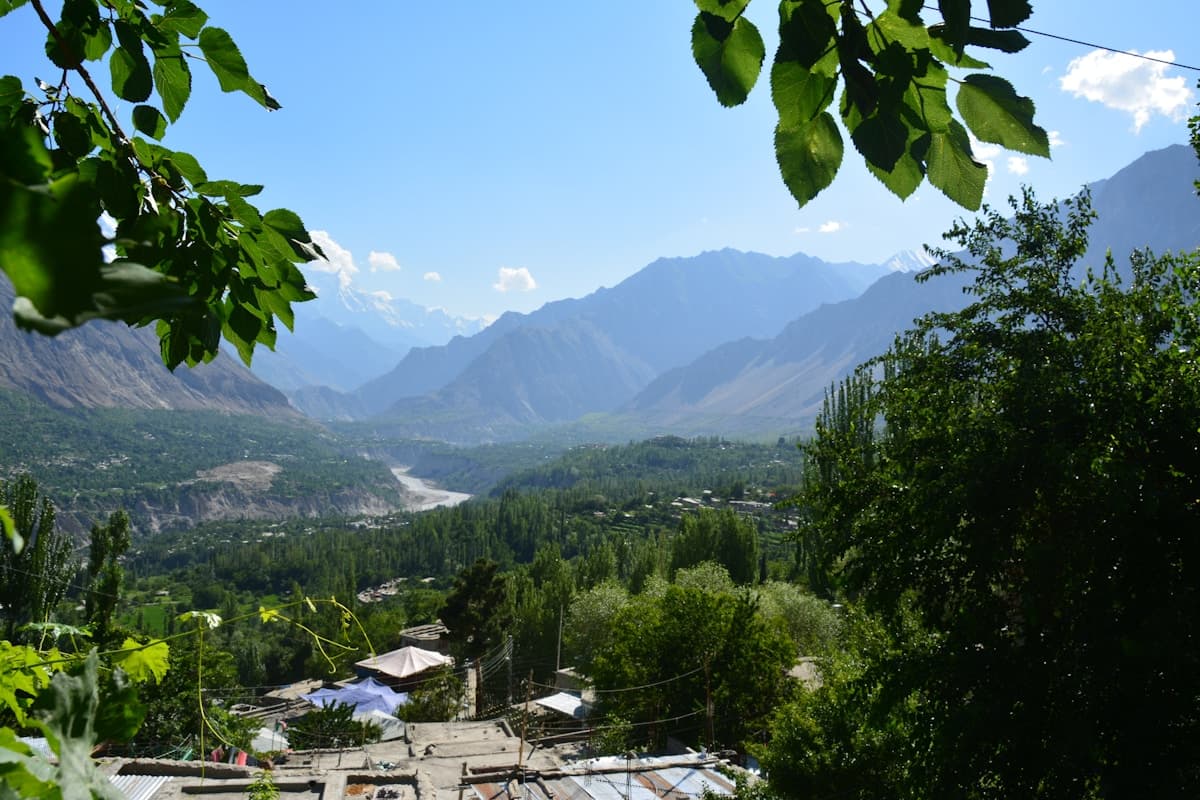
Most people who ask about Hunza Valley are thinking about the apricot blossom season in April or the full green summer of July and August. October rarely comes up. This is a mistake. October in Hunza is, in our opinion, the valley at its most beautiful and its most itself.
What October in Hunza actually looks like
By mid-October the apricot and poplar trees that line Karimabad's terraces have turned golden yellow and deep orange. The harvest is finished: apricots are dried on rooftops, walnuts are cracked and drying in the sun. The light in October is different from summer: lower-angled, warmer in colour, longer in shadow. Rakaposhi and Ultar catch this light differently than they do in August and the photographs that come out of October trips are consistently the ones guests print and frame.
The air is clear. The monsoon remnants that can bring haze to summer skies in Hunza have cleared completely by October. Mountain views are sharper. Eagle's Nest at dawn in October, with the peaks catching the first horizontal light while the valley is still dark, is as good as it gets anywhere in the Karakoram.
Planning a trip to Hunza?
Rakaposhi, Attabad Lake, Baltit Fort, Raahi plans it privately, at the pace you want.
Free PDF with the daily breakdown, hotels, costs, and the routes we use. No spam. Unsubscribe in one click.
Practical advantages of October travel
Peak season in Hunza runs from June through August. By October, most Pakistani and international tourists have left. Hotels that were booked solid in August have rooms available on short notice. Prices at mid-range properties drop by 20 to 30 percent. The restaurants in Karimabad have shorter queues. Eagle's Nest and Baltit Fort are less crowded on a Tuesday in October than on any day in August.
The Karakoram Highway is open and in good condition in October. The Attabad Lake tunnels are clear. The road to Passu and Gulmit is straightforward. Khunjerab Pass is still open in October, usually until mid-to-late October before it closes for winter. If visiting the pass is on your list, October is your last window before next year.
What to expect with weather
October days in Karimabad (2,440 metres) are typically 10 to 18 degrees Celsius. Sunny, dry, and comfortable for walking. Evenings drop to 5 to 8 degrees: bring a warm layer. Higher elevations like Eagle's Nest (3,100 metres) are noticeably cooler: a mid-layer and windproof jacket are necessary for the pre-dawn drive up.
Rain is uncommon in October but possible. Snow on the high passes (Khunjerab, Mintaka) can appear from mid-October. This is not a concern for valley travel but matters for anyone planning to drive to the pass or trek at altitude.
What to do in Hunza in October
The full summer programme applies in October: Baltit and Altit Forts, Attabad Lake boat trips, Eagle's Nest sunrise, Rakaposhi viewpoint at Minapin, the old Karimabad bazaar. The difference is you do all of it at a slower pace with less company.
October is also when the Hunza harvest is at its most photogenic. Apple orchards, walnut trees, and the drying apricots on flat rooftops create subjects that are unique to this season. For photographers, the combination of golden foliage, clear skies, and dramatic mountain light makes October the strongest month of the year in Hunza.
October versus April: which to choose
April is famous for blossom and October is famous (among those who know) for colour. Both are excellent. The practical difference: April blossoms are weather-dependent and the window is narrow (sometimes 10 to 14 days in a specific valley). October colour is more predictable and lasts 3 to 4 weeks. For most travellers who cannot time a trip to a narrow 10-day window, October is the more reliable choice for a special-season Hunza experience.
If you are combining Hunza with Skardu, October works well for both. Skardu is good through October. Deosai's road closes sometime in October depending on the year, so an early October trip can still include the plateau.
Tell us your dates and we will tell you exactly what is and is not accessible in October for your specific itinerary. Our Do Wadiyan 10-day itinerary runs through October and covers both Skardu and Hunza. If you are deciding between October and peak summer, see our Hunza in July and August guide for the contrast. For what to do once you arrive, see our things to do in Hunza guide and the 5-day Hunza itinerary. Get in touch to plan your autumn trip.
Frequently Asked Questions
What is Hunza like in October?
October is the autumn colour season: the poplar and willow groves that line the irrigation channels turn gold and amber across the terraced valley. Temperatures drop to 10 to 20°C days and 2 to 8°C nights. Tourist numbers are lower than peak summer, accommodation is available at shorter notice, and mountain views are typically sharper than in the hazy August peak.
Is Eagle's Nest accessible in October?
Yes, typically through October. The 4x4 track to Duikar remains open unless early snowfall closes it, which is unusual before November. Eagle's Nest in October morning light, with autumn colour in the orchards below and clear mountain profiles above, is one of the strongest photography experiences in the Hunza calendar. Check locally for current road conditions before the drive.
What is still open in Hunza in October?
All main attractions: Baltit Fort, Altit Fort, Attabad Lake, Eagle's Nest, and upper Hunza toward Passu. The Khunjerab Pass typically closes in late October or early November, check the current date if it is on your list. Most guesthouses and restaurants in Karimabad remain open through October. November is when closures begin across the valley.