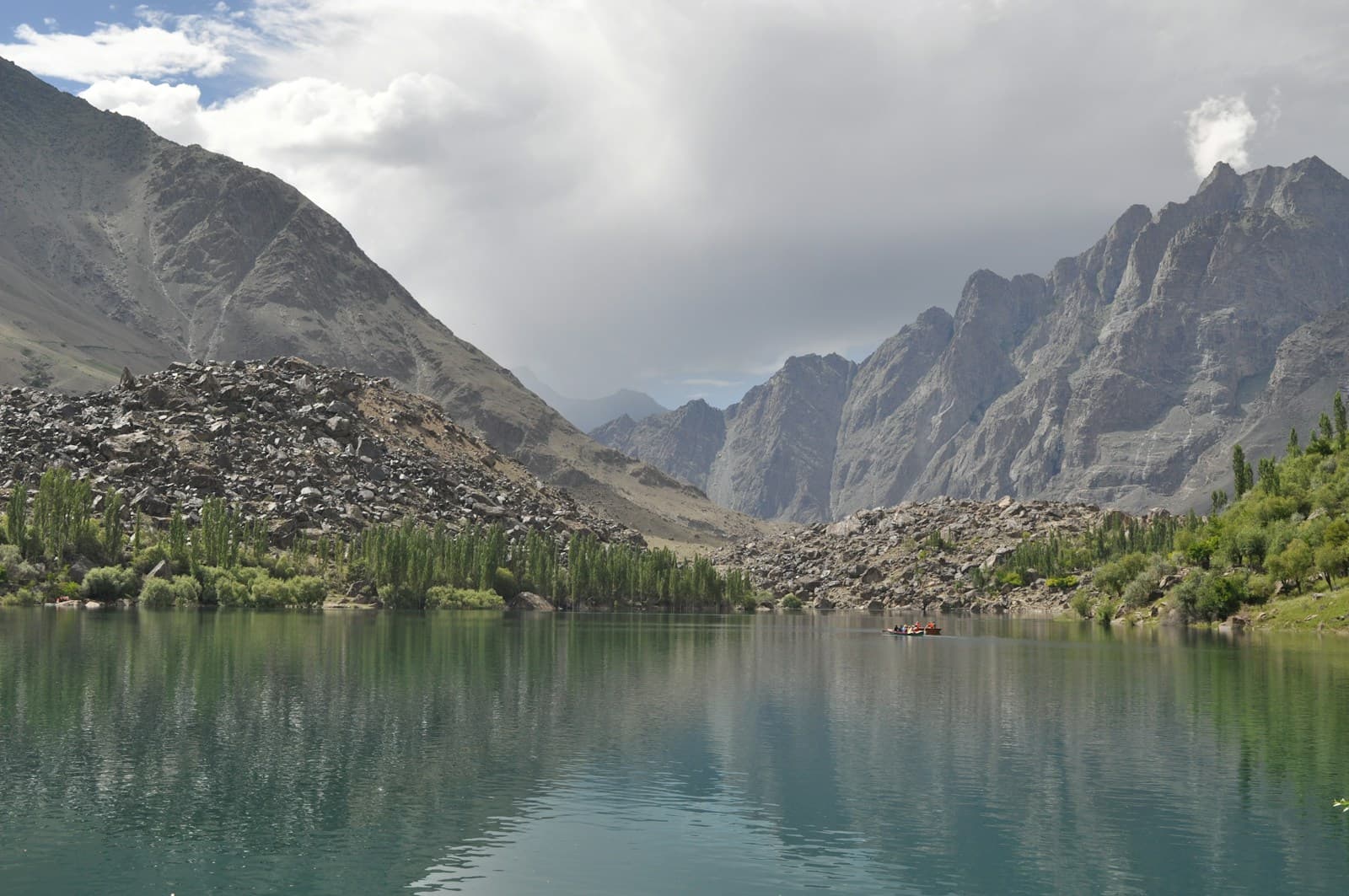
The Karakoram Highway is one of the great mountain roads of the world. Running approximately 1,300 kilometres from Islamabad to the Chinese border at Khunjerab Pass (4,693m), it was built between 1959 and 1979 by Pakistani and Chinese engineers at a cost of 810 lives. It connects the subcontinent to Central Asia through the highest and most geologically unstable terrain on earth.
For travellers heading to Hunza and Skardu, the KKH is either the journey itself or the road you cross to get there. Either way, it is worth understanding before you go.
The route in sections
Islamabad to Besham (300km, 4-5 hours): The drive starts on the Hazara Motorway, a modern toll road north of Islamabad. After Abbottabad the road narrows and begins following the Indus. This first section is the least dramatic but the most comfortable. Besham is a common overnight stop for those breaking the drive to Gilgit or Skardu.
Ready to plan your trip?
Tell us where you want to go and how long you have. We build the itinerary around what matters to you.
Free PDF with the daily breakdown, hotels, costs, and the routes we use. No spam. Unsubscribe in one click.
Besham to Chilas (200km, 3-4 hours): The gorge section. The Indus cuts through rock walls that rise hundreds of metres on both sides. This is where the KKH earns its reputation: the road is carved into cliff faces, narrows at points to a single lane, and drops away on the river side without guardrails in many sections. It is also where you begin to see the Karakoram range properly for the first time: Nanga Parbat (8,126m) first appears above Chilas, its north face visible from the road.
Chilas to Gilgit (100km, 2 hours): The Indus gorge continues. Chilas to Gilgit passes the Fairy Meadows turnoff (Raikot Bridge) with Nanga Parbat visible above. Gilgit is the administrative capital of Gilgit-Baltistan and the point where routes diverge: north to Hunza and Khunjerab, or east on the Indus Highway to Skardu.
Gilgit to Hunza (100km, 2.5 hours): The most developed section for tourism. The road runs through Rahimabad, Danyore, and Nomal before climbing into the Hunza Valley proper. Rakaposhi comes into view at Minapin: a roadside viewpoint with one of the most dramatic mountain faces accessible from a car in the world. Karimabad sits above the road in Hunza, reached by a 10-minute side road from Aliabad.
Hunza to Khunjerab Pass (155km, 3.5-4 hours): The northern extension past Attabad Lake, Passu, Gulmit, and Sost to the Chinese border. This section passes through the Gojal Valley, which is culturally and linguistically distinct from Hunza proper. The landscape becomes increasingly barren and high-altitude. See our Khunjerab Pass guide for details on the final section.
Road conditions
The KKH is paved for its entire length but conditions vary considerably by section and season. The Besham-to-Chilas gorge section is the roughest: landslides are common in spring and summer, and sections of road occasionally require temporary diversions or single-lane passage. The Attabad tunnels (replacing the old lake crossing) are now solid but dark and unmarked. The sections in Hunza are the best-maintained.
The road is open year-round to Hunza. The Khunjerab section closes approximately November to April. Landslides can close sections temporarily at any time: local drivers and operators know current conditions. Always check before you go.
How long does the drive take?
Islamabad to Karimabad (Hunza) is approximately 600km and takes 14 to 16 hours driving straight through. Almost no one drives straight through: the road after dark is genuinely dangerous and the scenery is wasted in the dark. The standard approach is to break the journey at Besham or Chilas, making it a 2-day drive.
Gilgit to Skardu via the Indus Highway (the S-1) is a separate route (not the KKH proper): 200km, approximately 4 hours on a paved road following the Indus east. The S-1 was upgraded and fully paved in 2021, which cut the drive time significantly from older estimates still floating around online.
What you need
A private 4x4 with an experienced driver is strongly recommended over public transport (Coasters and minibuses that run the KKH have fixed schedules, shared space, and stop everywhere). The road quality and the driving environment on the KKH require a driver who knows this specific route. Raahi uses Land Cruiser Prado on all KKH routes.
Planning a KKH road trip
For travellers who want to do the full KKH experience, the classic route is: fly Islamabad to Skardu, explore Baltistan for 5-6 nights, drive to Gilgit, continue north to Hunza for 3-4 nights, and drive the KKH south back to Islamabad. This way you fly one direction (avoiding the longest section of mountain road) and drive the scenic KKH in daylight going south.
Our Do Wadiyan 10-day itinerary is built exactly on this structure: fly into Skardu, cover Baltistan, drive to Hunza, exit via the KKH. Get in touch to plan your KKH trip.
Frequently Asked Questions
How long is the Karakoram Highway from Islamabad to Hunza?
Approximately 600 kilometres, taking 14 to 16 hours of continuous driving. Most travellers break it overnight at Besham or Chilas, arriving in Karimabad on day two. The full KKH from Islamabad to the Khunjerab Pass at the Chinese border is 810 kilometres and takes 2 full driving days. The Islamabad-to-Hunza stretch is the most commonly travelled section.
What is the most scenic stretch of the Karakoram Highway?
The section from Chilas to Passu, roughly 300 kilometres, is the most dramatic. The road clings to the Indus and then the Hunza River through gorges that deepen as you move north, with Nanga Parbat visible from near Chilas and Rakaposhi dominating the view as you approach Hunza. The Attabad Lake section, where the road passes through tunnels blasted after the 2010 landslide dam, is spectacularly disorienting.
Is the Karakoram Highway safe to drive?
Yes. Gilgit-Baltistan has an excellent safety record for tourists and the KKH is well-patrolled. The road itself is the main consideration: it is a mountain road with sections subject to rockfall, seasonal flooding, and rough surfaces. Drive in daylight, use a local driver familiar with the route, and check conditions for sections known for seasonal problems. A private 4x4 with an experienced local driver is the right way to do the KKH.