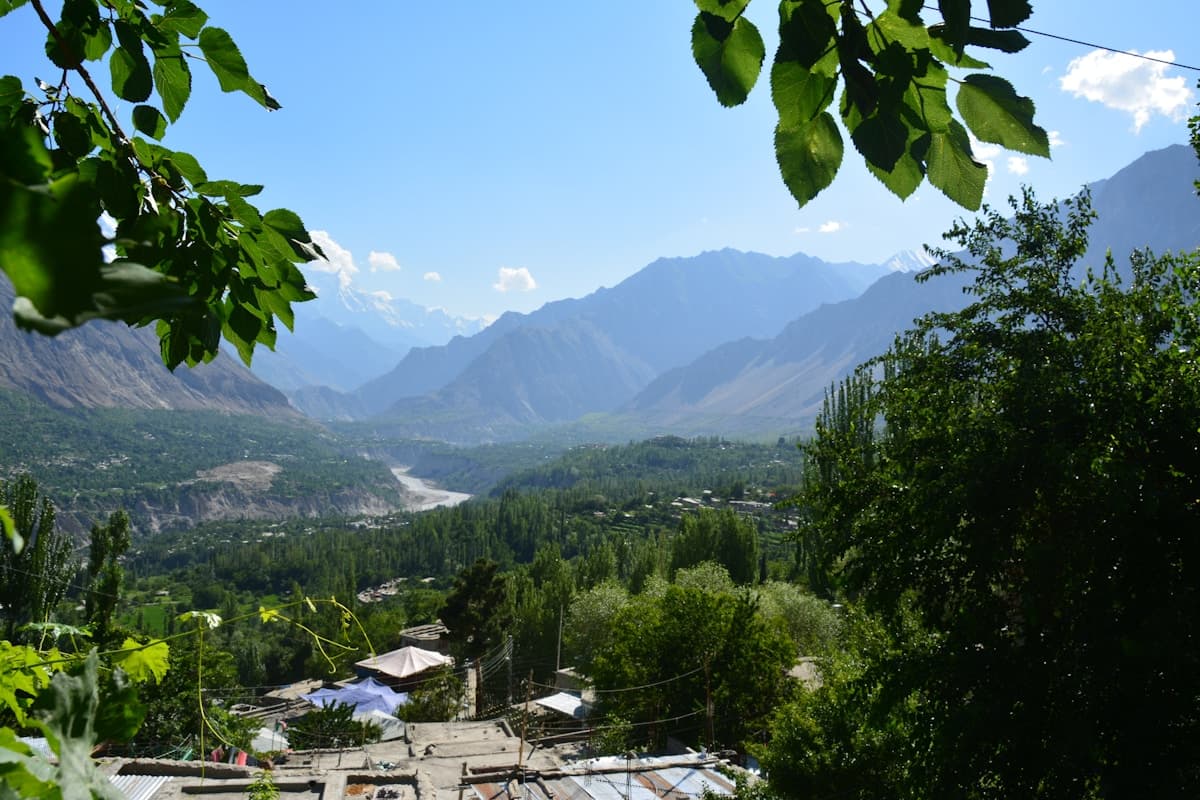
The Karakoram Highway is one of the great road journeys on earth. Built by Pakistan and China over two decades at enormous cost in lives and materials, the KKH runs from Hasan Abdal near Rawalpindi to the Khunjerab Pass at 4,693 metres on the Chinese border, roughly 800km of road through the Indus Valley, the Karakoram, and the Hindu Kush.
For tourists, the relevant section runs from Islamabad through Abbottabad, Besham, Chilas, Gilgit, Hunza Valley, Gulmit, Passu, Sost, and up to Khunjerab Pass. The full drive from Islamabad to Khunjerab and back can be done in a week, but two weeks is a more human pace that allows you to actually stop and see the things that make the road worth driving.
The Route: Islamabad to Khunjerab
The KKH from Islamabad to Khunjerab is roughly 800km and can technically be driven in two very long days. Nobody should. The drive rewards stopping, the landscape changes character approximately every two hours and each section has its own logic.
Ready to plan your trip?
Tell us where you want to go and how long you have. We build the itinerary around what matters to you.
Free PDF with the daily breakdown, hotels, costs, and the routes we use. No spam. Unsubscribe in one click.
- Islamabad to Besham: 220km, 4 to 5 hours. The KKH leaves the Islamabad plain through the Margalla Hills and descends into the Indus Valley at Attock. The section through Kohistan (Mansehra to Besham) runs through deep river gorges with dense forest above. Besham is the standard first overnight, basic hotels on the highway.
- Besham to Chilas: 155km, 3 to 4 hours. The road follows the Indus north, passing Dasu and the Dasu Hydropower project site. The valley narrows and the rock faces become more dramatic. Chilas is a garrison town at the northern edge of Kohistan, fuel, food, and a security checkpoint. The Nanga Parbat (8,126m) massif becomes visible on the western horizon shortly before Chilas.
- Chilas to Gilgit: 120km, 2 to 3 hours. The highway traverses the Indus Kohistan to Gilgit-Baltistan border. Nanga Parbat viewpoints appear on the right (western) side of the road, the Raikot Face is visible from the road itself near Tarshing. Gilgit is the regional capital: fuel, banking, a functional airport, and the crossroads for Hunza, Skardu, and Chitral.
- Gilgit to Karimabad: 100km, 2.5 hours. The road follows the Hunza River north through increasingly spectacular gorge scenery. The Rakaposhi (7,788m) viewpoint at Ghulmet, about 70km from Gilgit, is the best roadside mountain view on the entire KKH. Rakaposhi rises over 6,000 metres from the valley floor: one of the greatest vertical reliefs in the world. Karimabad is the main stop in Hunza.
- Karimabad to Passu: 65km, 1.5 hours north. The valley widens past Attabad Lake, the turquoise 21km lake formed by a 2010 landslide. Road tunnels bypass the old submerged KKH section. Passu village is below the Passu Cones, the cathedral rock spires above the village.
- Passu to Sost: 20km, 30 minutes. Sost is the Pakistan customs and immigration point before the Chinese border. The last fuel on the Pakistan side. Basic hotels for the overnight before the Khunjerab drive.
- Sost to Khunjerab Pass: 86km, 1.5 to 2 hours. The final climb to 4,693 metres. The landscape becomes increasingly sparse and high-altitude. Yaks graze on the plateau. The pass itself is a Pakistan to China border marker at the top, a gate, a monument, and a parking area for photographs.
Best Season for the KKH Drive
May through October is the standard tourist window for the full KKH including Khunjerab Pass. The pass itself is typically open May 1 to October 31, closed by snow in winter. The lower sections (Islamabad to Gilgit) are passable year-round but winter driving through Kohistan requires care.
June and September are the two best months for a KKH road trip: clear roads, reliable weather, not overcrowded, and the full pass accessible. July and August are busier and hotter at lower elevations. October offers the best mountain light and autumn colour in Hunza, but the pass closes by November 1 and shoulder-season nights are cold at altitude.
Check the best time to visit Gilgit-Baltistan guide for a full month-by-month breakdown.
Driving Yourself vs Hiring a Vehicle
Most international tourists hire a private 4x4 with a local driver rather than self-driving. The reasons are practical: the mountain sections require familiarity with the road, the Kohistan section has specific knowledge requirements, some vehicle documentation requirements for crossing between KPK and Gilgit-Baltistan need local handling, and checkpoint interactions are smoother with a local driver who knows the procedure.
Raahi provides private 4x4 transport with experienced drivers for the full KKH route or any section of it. Our vehicles are Land Cruiser 70-series or equivalent, appropriate for the road conditions. See the tour packages page for itineraries that include the full KKH route.
Overnight Stops and Where to Stay
The standard overnight sequence for a one-way Islamabad to Khunjerab drive over 5 to 6 days:
- Night 1: Besham or Dasu (highway hotels, basic but clean)
- Night 2: Chilas (a necessary stop; the Shangrila Chilas is the best option)
- Night 3 to 4: Karimabad, Hunza (2 nights minimum, see the Hunza hotels guide)
- Night 5: Passu or Sost (before the Khunjerab day-drive)
For the return (or the Skardu extension), add a branch from Gilgit east to Skardu on the Indus Highway, 130km, approximately 2.5 to 3 hours, through the deepest gorge section of the Indus River.
What to Look for at Each Section
The drive has distinct moods by section. In Kohistan (Besham to Chilas), the Indus is at its most powerful: green-white and fast, flanked by walls of rock that have never been accessible enough for settlement. This section feels genuinely remote. After Chilas, Nanga Parbat appears without warning, the scale of it against the sky is a moment most drivers stop for.
The Gilgit-Hunza section has the best roadside mountain views. Rakaposhi at Ghulmet, then the gorge walls of the upper Hunza River, then the pastoral terraces of Karimabad. Attabad Lake is a shock of colour after the dusty road, the turquoise is so vivid it looks digitally enhanced and isn't.
Above Passu, the glaciers descend toward the road. The Batura Glacier terminus is visible from the KKH north of Passu. The landscape above Sost becomes a high plateau, brown, windswept, and immense. Khunjerab itself feels like the end of the world in the best possible way.
Practical Notes
Fill fuel at every opportunity from Besham onward, petrol stations become less frequent and less reliable in Gilgit-Baltistan. Carry cash; ATMs in Gilgit and Karimabad work reasonably well but are absent north of Gulmit. Mobile data is available on Zong and Jazz SIMs through most of Hunza; connectivity drops north of Passu and is patchy through Kohistan.
Road conditions change with the season and after monsoon events, landslides occasionally close sections for hours or days. Build flexibility into your itinerary. The KKH is a mountain road in an active seismic zone and should be treated accordingly.
For guided road-trip itineraries along the full KKH or specific sections, see our Baltistan to Hunza crossing tour or contact Raahi to build a custom route.
Frequently Asked Questions
How long does it take to drive the Karakoram Highway from Islamabad to Khunjerab?
The 800km drive from Islamabad to Khunjerab Pass takes a minimum of 2 full driving days if done non-stop, but nobody should. The standard tourist road trip takes 5 to 7 days including overnight stops at Besham or Chilas, two nights in Karimabad, and a night in Passu or Sost before the pass.
When is the Karakoram Highway open to Khunjerab Pass?
Khunjerab Pass is open approximately May 1 to October 31. The lower KKH (Islamabad to Gilgit) is open year-round. The upper section (Gilgit to Khunjerab) is usually accessible from late April, but the pass itself opens when the Chinese authorities open the gate, typically May 1.
Is the Karakoram Highway safe for foreign tourists?
Yes. The KKH is routinely driven by international tourists throughout the May to October season. Kohistan was historically a sensitive area for outsiders, but the situation has improved markedly and the road sees regular tourist traffic. Drive in daylight, use a local driver who knows the route, and keep abreast of current travel advisories for Pakistan.
Can I drive the KKH myself or do I need a driver?
You can self-drive if you have an International Driving Permit and your home country licence. In practice, most international tourists hire a 4x4 with a local driver: mountain road familiarity, checkpoint management, and the ability to source help if anything goes wrong are worth the cost. Raahi provides private 4x4 transport for the full KKH or any section.
Can you cross from Pakistan into China at Khunjerab?
Pakistani nationals can cross freely. Foreign nationals need a valid Chinese visa arranged in advance, you cannot obtain a visa at the Khunjerab border. Most foreign tourists drive to the pass for the view and photographs, then return to Pakistan. If you have a Chinese visa, the crossing to Tashkurgan is possible.