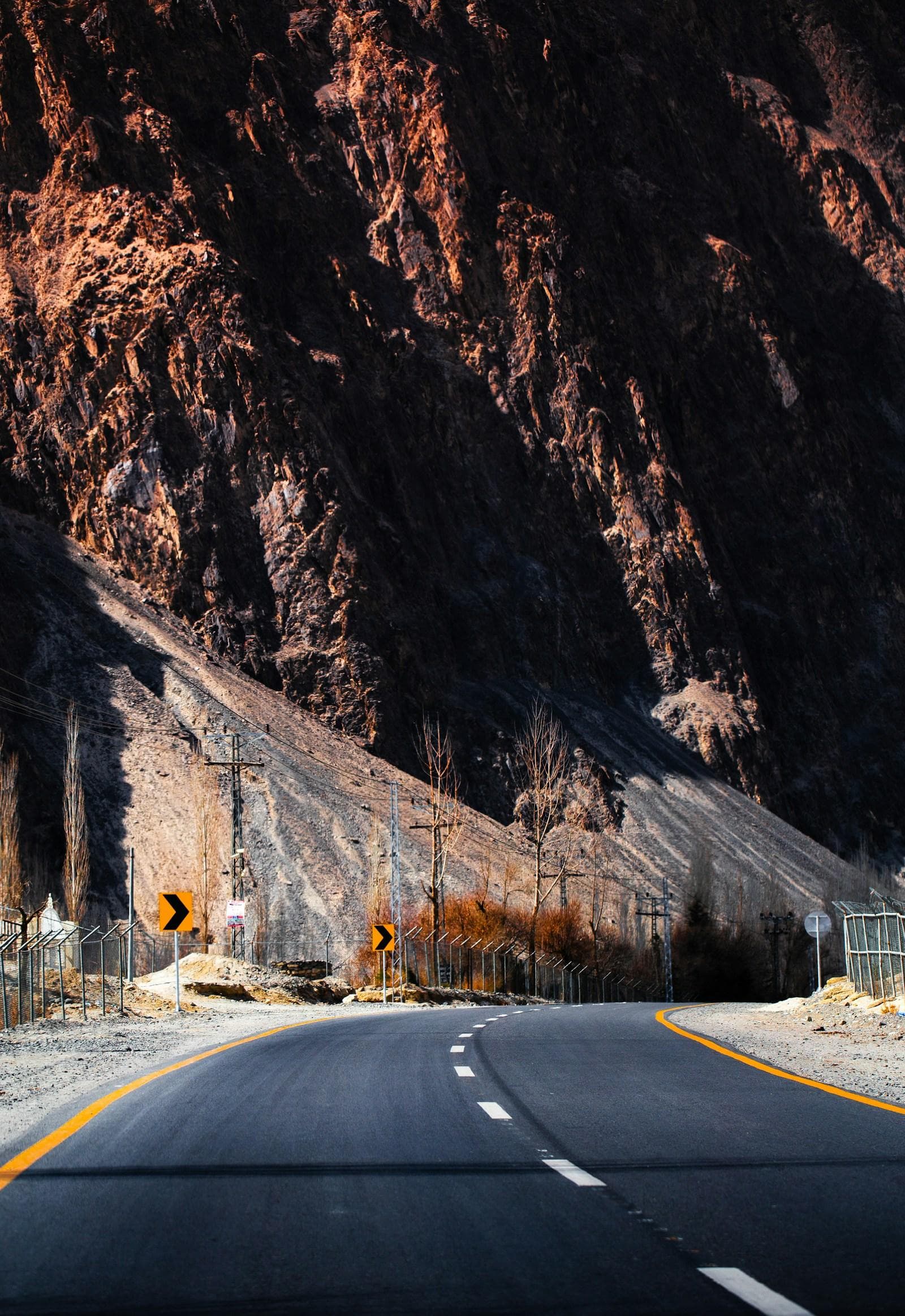
Both are mountain destinations in Pakistan. Both involve long drives from Islamabad, scenic valleys, and high-altitude lakes. Beyond those surface similarities, Skardu and Naran Kaghan are different in almost every meaningful way, in landscape character, accessibility, altitude, and the type of experience they offer.
The question of which to choose comes down to how much time you have, what kind of scenery you want, and how far you are willing to go.
Getting There: Accessibility Comparison
Naran Kaghan is significantly more accessible. The road from Islamabad to Naran is approximately 240km, roughly 5 to 6 hours by car. It is entirely on-road through KPK, with no flights required and no weather dependency. Families and first-time mountain travellers often choose Naran precisely because the journey is manageable in a single day.
Planning a trip to Skardu?
Private 4×4, boutique hotels, and a day-by-day itinerary built around what you want to see.
Free PDF with the daily breakdown, hotels, costs, and the routes we use. No spam. Unsubscribe in one click.
Skardu requires either a 45-minute domestic flight from Islamabad (subject to weather cancellations, particularly in winter and monsoon) or a 14 to 18 hour drive via the Karakoram Highway. The flight is the standard choice for tourists. Skardu's comparative remoteness is part of what keeps it less crowded, it filters out day-trippers and weekend visitors.
The Landscapes: What You Are Actually Comparing
Naran Kaghan sits in the Kunhar River valley in the Mansehra district of KPK. The landscape is lush: heavily forested hillsides, green meadows, and the famous Saif ul Malook Lake at 3,224m, a deep blue glacial lake with Malika Parbat (5,290m) reflected in the water. Babusar Pass (4,173m) at the northern end of Kaghan Valley gives views toward the Karakoram and Himalayan foothills. It is beautiful, green, and accessible.
Skardu sits in a high-altitude desert basin at 2,400m in Gilgit-Baltistan. The landscape is stark, dramatic, and on a completely different scale: the Sarfaranga Cold Desert, sand dunes with 7,000m peaks behind them; Deosai Plateau at 4,114m with Himalayan brown bears; the Kharpocho Fort above the Indus; and the Kachura Lakes. K2 (8,611m) is reachable from Skardu for trekkers.
The scale difference is significant. The highest peak visible from Naran is around 5,000 to 5,500m. The peaks around Skardu exceed 7,000m, and K2 itself is 8,611m. This is not a subtle distinction, the visual impact of the Karakoram is in a different category.
Altitude and Physical Demands
Naran town sits at 2,400m, the same as Skardu. Saif ul Malook Lake at 3,224m is reachable by jeep (or an easy walk for fit travellers). Babusar Pass at 4,173m is the highest accessible point in Kaghan Valley and requires no special acclimatisation for most visitors.
Skardu itself is similar, but Deosai at 4,114m and any trekking above Skardu involve real altitude considerations. If you have no experience at altitude and are concerned about how your body will respond, a first visit to Naran may be a gentler introduction than going straight to Deosai. That said, Skardu at 2,400m is perfectly comfortable for almost everyone and altitude becomes a factor only if you push above 4,000m.
Crowds and Tourism Density
Naran is Pakistan's most popular mountain destination for domestic tourism. In peak season (July and August during school holidays), it is heavily crowded: traffic jams on the approach road, queues for Saif ul Malook jeeps, and guesthouses booked weeks in advance. The lake and valley are genuinely beautiful but the tourist infrastructure around them is dense.
Skardu receives far fewer visitors, partly because of the flight requirement, partly because of its distance from the major population centres. In peak season (July to August), Skardu's hotels fill but the sites themselves feel spacious. Deosai National Park has vastly lower visitor numbers than any comparable natural attraction in Pakistan. If solitude and landscape immersion matter to you, Skardu wins this comparison clearly.
Cost Comparison
Naran Kaghan is generally cheaper: no flights, shorter journey, established road infrastructure, and competition among a large number of guesthouses drives accommodation prices down. A 3-day Naran trip from Islamabad by road is one of the most economical mountain escapes in Pakistan.
Skardu costs more. The flight (PIA Islamabad to Skardu) is PKR 10,000 to 20,000 one-way depending on season and how far in advance you book. Accommodation in Skardu ranges from budget guesthouses to boutique properties. Overall, a 5-day Skardu trip costs roughly twice what a 5-day Naran trip costs, all else being equal.
Who Should Go Where
Choose Naran Kaghan if: you have 3 to 4 days, you are travelling with children or elderly parents for whom the journey length matters, you want green landscapes with easy lake access, or you are looking for a cost-effective mountain escape from Islamabad.
Choose Skardu if: you have 5 or more days, you want the most dramatic mountain scenery in Pakistan, you are interested in Karakoram heritage (forts, the cold desert, Shigar Valley), or you are planning any trekking. Skardu is also the better choice for photography, the light, the landscape, and the scale are in a different category.
If you have 10 or more days, the combination of Skardu and Hunza via the Karakoram Highway is the most comprehensive Pakistan mountain trip available. See our Skardu vs Hunza guide for that comparison, or the 10-day Baltistan to Hunza crossing tour for the combined itinerary.
For personalised advice on which destination suits your specific dates and travel style, message Raahi, we have helped hundreds of visitors make this decision.
Frequently Asked Questions
Is Skardu better than Naran Kaghan?
They offer very different experiences. Skardu has more dramatic Karakoram scenery, lower crowds, and a wider range of landscapes (cold desert, high plateau, heritage forts). Naran Kaghan is more accessible from Islamabad, greener, cheaper, and better suited for a short trip. For serious mountain scenery and a longer stay, Skardu is the stronger choice.
How long does it take to get to Naran from Islamabad?
Approximately 5 to 6 hours by road, about 240km. It is a full-day drive or an early start. The road through Mansehra and the Kunhar Valley is good quality. Compare this to Skardu: a 45-minute flight or a 14 to 18 hour road journey.
Is Saif ul Malook Lake worth visiting?
Yes, Saif ul Malook is genuinely beautiful, a deep blue glacial lake at 3,224m with Malika Parbat reflected in the water. The challenge is that in peak season (July to August) it is heavily visited, the jeep convoy system creates queues, and the experience at the lake can feel crowded. Going early in the morning or in September reduces this significantly.
Can you do both Skardu and Naran Kaghan in one trip?
Logistically possible but not efficient, they are in different directions from Islamabad and connecting them directly requires either backtracking or a very long drive via the KKH. Most travellers choose one or the other per trip. If you want multiple mountain destinations, the Skardu to Hunza combination via the Karakoram Highway is a more coherent route.
What is the best time to visit Naran Kaghan?
May and September are the best months, the weather is clear and cool, and the crowds are much lower than July and August. June is possible but the Babusar Pass sometimes has late snow. July and August are the busiest months (school holidays drive domestic tourism) but also warmest. October is beautiful but Babusar Pass closes with the first snowfall.