Loading…
N 35°18′ · E 75°37′
Shigar Valley
Sarfaranga Cold Desert
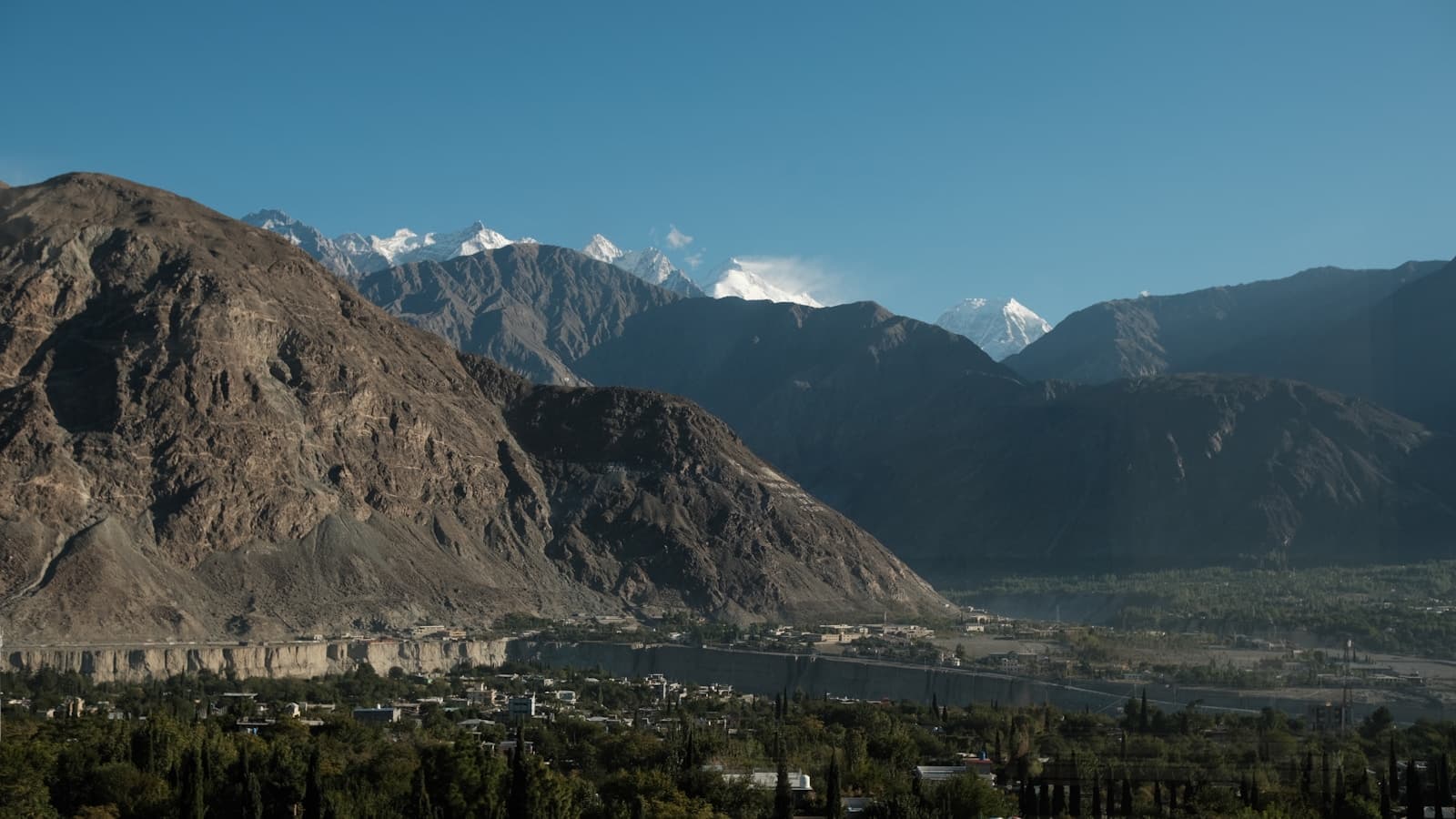
Sand dunes in the shadow of 7,000-metre peaks. One of the most unexpected landscapes in Pakistan, a desert that gets six months of snow.
About the Desert
A desert that belongs
in two worlds at once.
Sarfaranga is the kind of place that makes first-time visitors stop the car and stare. The Shigar Valley road approaches from the north through steep gorge walls, and then the valley opens and there they are: pale sand dunes rolling across the flat valley floor, with the permanent snowfields of the Karakoram rising directly behind them. The contrast between desert and alpine is startling in a way that photographs cannot fully prepare you for.
The desert sits at roughly 2,300 metres elevation, high enough that winters bring heavy snow and temperatures well below freezing, yet in summer the valley floor turns dry and the winds build the dunes against the northern slope. This is what makes it a cold desert: aridity caused not by heat but by rain-shadow from the surrounding mountains, combined with a climate that is frozen for half the year.
Sarfaranga is on the road between Skardu and Shigar Fort, which means every Raahi itinerary that visits Shigar Valley passes through it. The light is usually best in the late afternoon, when the dunes cast long shadows and the peaks behind them catch the last sun.
Practical Info
Getting there
and what to do.
Getting there
30 to 35 kilometres from Skardu city via the Shigar Valley road, about 45 minutes to an hour. The route passes through Shigar town and Shigar Fort. No permit required; the desert area is open and accessible year-round weather permitting.
Activities
Photography is the primary draw. Local operators offer jeep and ATV rides across the dunes in the summer months. No fixed entry fee for the desert area itself; ATV rental costs vary by season and duration.
Best time
May through October. The valley road can be snowbound December to March. Afternoon light is best for the dune-mountain contrast. June and September offer the best combination of warmth and clear skies.
Combine with
Shigar Fort and the 14th-century Amburiq Mosque are on the same road, visit both before continuing to the desert. This makes a natural half-day Shigar Valley excursion from Skardu.
Common Questions
Before you go
answered honestly.
What is the Sarfaranga Cold Desert?
Sarfaranga Cold Desert is a high-altitude desert in Shigar Valley, about 35 kilometres from Skardu city. It is characterized by pale sand dunes set against a backdrop of snow-capped Karakoram peaks. The desert sits at roughly 2,300 metres elevation and experiences very cold winters despite being a desert, hence "cold desert." It is one of the most visually striking and unexpected landscapes in Baltistan.
How far is Sarfaranga Cold Desert from Skardu?
Approximately 30 to 35 kilometres from Skardu city via Shigar Valley, about 45 minutes to an hour by road. The route follows the Shigar River gorge and passes through Shigar town and Shigar Fort before reaching the desert area.
Is Sarfaranga the highest cold desert in the world?
It is often described as one of the highest cold deserts in the world, sitting at around 2,300 metres elevation. The claim of being the highest is sometimes disputed, the Gobi, Atacama, and parts of the Tibetan Plateau also compete for the title at various definitions. What is undisputed is that the combination of true sand dunes and 7,000-metre snowfields in the same frame is genuinely rare anywhere on earth.
What can you do at Sarfaranga Cold Desert?
Photography is the main draw, the contrast between pale dunes and dark Karakoram rock is unusual and photogenic in any light. Jeep and ATV rides across the dunes are available from local operators in the summer months. The desert is best combined with a visit to Shigar Fort and the Amburiq Mosque, which are on the same road from Skardu.
Plan Your Visit
Add Sarfaranga to your Skardu itinerary.
Sarfaranga is included in all Raahi Skardu itineraries that visit Shigar Valley. We combine it with Shigar Fort and the Amburiq Mosque as a half-day excursion.
→Skardu: complete destination guide→Upper Kachura Lake: Shangrila Resort and Skardu's most iconic lake→Kharpocho Fort: the King of Forts above Skardu town→Aghaaz Retreat: 3-day Skardu tour including Shigar Valley→Khwab Retreat: 5-day Skardu, Shigar & Deosai tour→Shigar Valley travel guide: fort palace, cold desert & what to do→Skardu in July: dune photography at Sarfaranga in peak season→Skardu in August: best conditions for Sarfaranga Cold Desert→Skardu in September: cooler temperatures at Sarfaranga→Skardu in October: last chance to visit Sarfaranga Cold Desert→Skardu in June: dunes, clear skies, and the season opening→Things to do in Skardu: cold desert, lakes, forts & stargazing→Plan a customized Skardu trip with our team
Plan Your Visit
Ready to visit Sarfaranga?
We'll build the itinerary.
Tell us your dates and group. We'll plan the Shigar Valley day around your pace.
Plan Your Trip