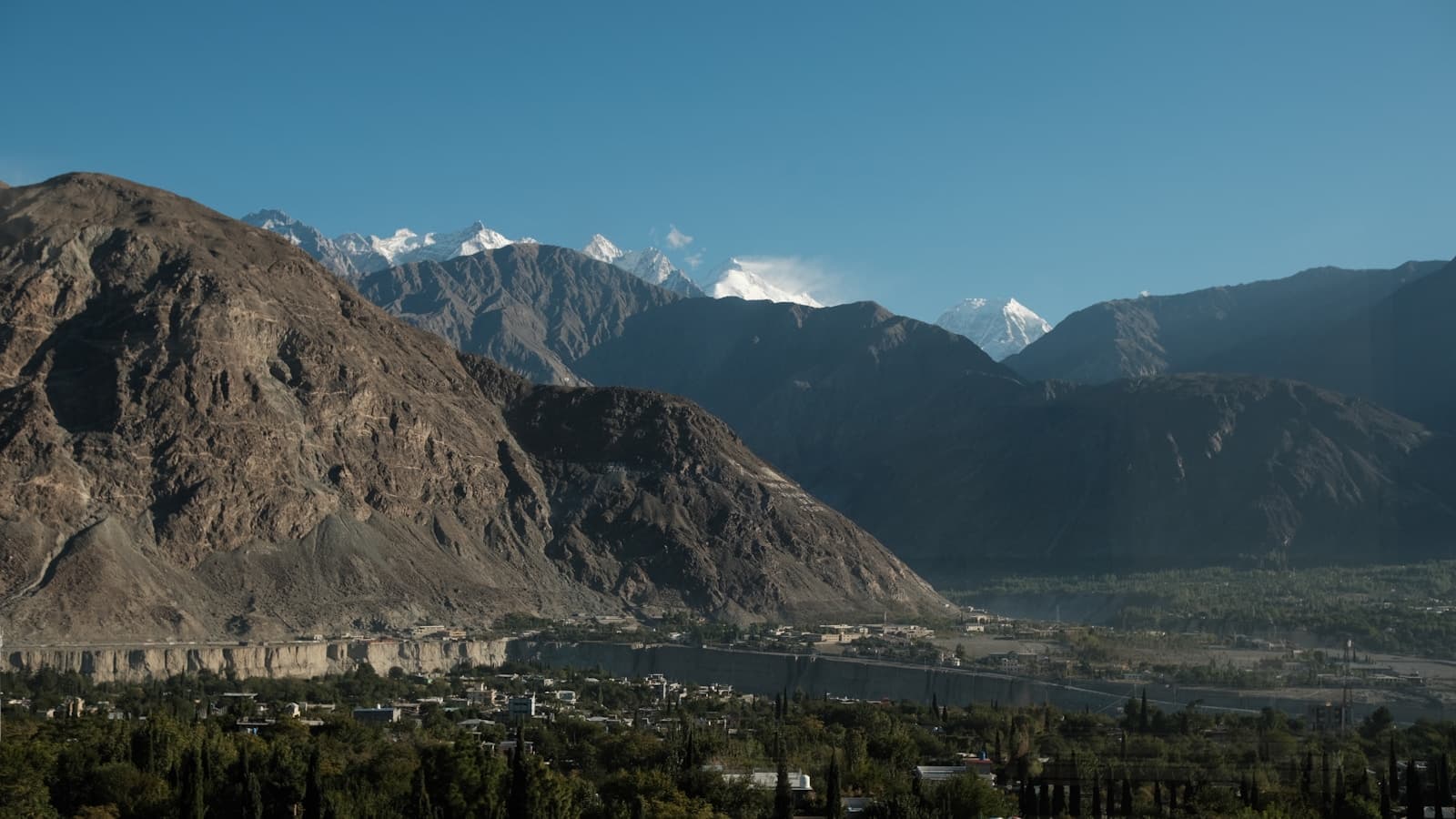
Shigar Valley is 30 minutes from Skardu and most travellers treat it as a day trip, which is correct, but slightly undersells what it contains. The valley has a restored 17th-century royal palace that is now one of Pakistan's finest heritage hotels, a 7th-century Buddhist rock carving, the Sarfaranga Cold Desert, and a pace of life that makes Skardu feel busy by comparison. If you are spending time in Skardu, Shigar Valley deserves a full day.
Shigar Fort Palace: why it is the main draw
Shigar Fort Palace, now operated as a Serena Heritage Hotel, is the most historically significant building in the Skardu district. Built in the 17th century at the mouth of the gorge where the Basha and Shigar rivers meet, it served as the royal residence of the Shigar Rajas for over three centuries. The Aga Khan Trust for Culture led its restoration in the early 2000s, and the result is genuinely extraordinary: the original carved wooden architecture is intact, the garden has been restored from historical plans, and the fort sits in the landscape as it was always meant to.
The hotel has 18 rooms inside the historic fort and an adjacent modern wing. Even if you are not staying, the grounds, museum, and gardens are open to day visitors (a small fee applies). Budget two hours here. The craftsmanship visible in the carved wooden balconies, window frames, and ceiling panels gives a clearer sense of Balti royal architecture than any museum exhibit could.
Adding Shigar to your trip?
Shigar Fort Palace books out fast. We handle the reservation, transport, and the cold-desert day.
Free PDF with the daily breakdown, hotels, costs, and the routes we use. No spam. Unsubscribe in one click.
If your trip allows one overnight in Shigar, take it. The fort is most atmospheric at dusk and dawn when day visitors have left.
Manthal Rock Buddha
The Manthal Rock Buddha is a 7th-century carving above the left bank of the Indus River, approximately 10 kilometres from the Shigar Fort. Carved into a large boulder during the period when Buddhism was the predominant religion in Baltistan, it predates the valley's conversion to Islam by several centuries. The carving is not the most dramatic rock art in Central Asia, but its context, a Buddhist image in the heart of what is now a Muslim-majority region, makes it worth the short detour. The site is unfenced and accessible on foot from the road.
Sarfaranga Cold Desert
At the upper end of Shigar Valley, approximately 25 kilometres from the fort, the Sarfaranga Cold Desert occupies a wide section of the valley floor. Sand dunes at 2,500 metres, banked against Karakoram foothills with permanent snow above them: it is a landscape that does not quite make visual sense until you are standing in it. ATV and jeep rides are available at the entry area. The dunes are not enormous by desert standards, but the combination of sand and snow in a single frame is difficult to find anywhere else on earth.
The drive itself
The road from Skardu into Shigar Valley enters through a narrow gorge before opening into the wider valley. The gorge section is one of the more dramatic short drives in the district: high walls, a rushing river, and the fort suddenly visible at the valley mouth as you emerge. The full drive from Skardu city to the cold desert and back is about 80 kilometres and takes 3 to 4 hours of driving, leaving most of the day for stops.
Combining Shigar with Skardu
Most visitors do Shigar as a day trip from Skardu, pairing it with the cold desert in the afternoon and the fort in the morning. An alternative approach: leave Skardu after an early breakfast, spend the morning at the fort, have lunch at the Shigar Fort restaurant (open to day visitors), visit Sarfaranga in the afternoon, and return to Skardu in time for dinner. This is the natural structure for a full day in the valley.
For those with more time, a night at the fort adds morning and evening light to the experience, the mountain view from the fort terrace at sunrise is one of the finer starts to a day in Baltistan. Our Shigar Fort Palace review covers what staying there is actually like. For where Shigar fits in a wider trip, see the 5-day Skardu itinerary. Our Aangan Retreat (7-day tour) includes two nights in Shigar as part of a broader Baltistan itinerary. The Khwab Retreat (5 days) passes through for a full day. Get in touch if you want Shigar as part of a customised trip.
What Shigar is not
Shigar is not a destination for hiking or trekking, the valley walls are steep and the trails above the fort require local guidance and a full day. It is not an alternative to Skardu city: it has very limited non-heritage accommodation and no large restaurants. It is a heritage and landscape destination, best experienced slowly and without a packed schedule. That is what makes it so good.
Frequently Asked Questions
Is Shigar Valley worth a full day from Skardu?
Absolutely. Shigar Valley is 30 minutes from Skardu and contains Baltistan's finest heritage building (Shigar Fort Palace), the 7th-century Manthal Rock Buddha, and the Sarfaranga Cold Desert, three distinct experiences in a single valley. A half-day covers the fort only. A full day covers all three with time to appreciate each one properly.
Should I stay overnight in Shigar or day trip from Skardu?
Overnight if your itinerary allows. Shigar Fort Palace is most atmospheric at dawn and dusk when day visitors have left, and a night gives you the fort in its own quiet. The Shigar Fort Palace review covers what staying there is actually like. For guests on a tighter schedule, a full day trip from Skardu works well and covers the essential stops.
What is the best order to see Shigar Valley in one day?
Shigar Fort Palace first thing in the morning (best light, before day visitors arrive), the Manthal Rock Buddha as a quick stop en route to the upper valley, then Sarfaranga Cold Desert in the afternoon when the dune shadows are most defined. Return to Skardu by early evening. Total driving: 80 kilometres return plus the cold desert approach.