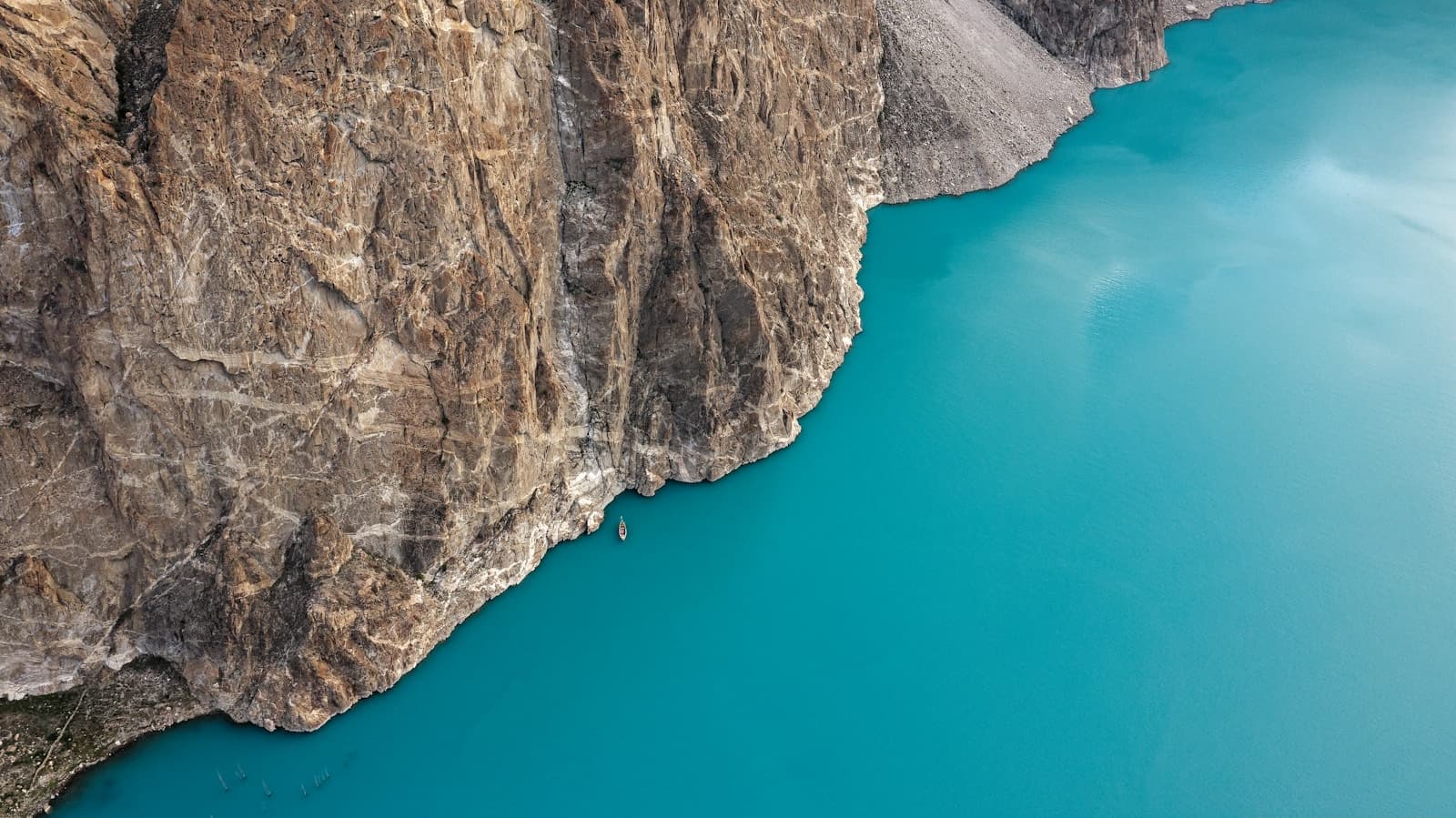
Attabad Lake did not exist before January 2010. On the 4th of that month, a massive landslide above the village of Attabad buried 19 homes, killed 20 people, and blocked the Hunza River entirely. The water backed up behind the debris dam for five months, eventually forming a lake 21 kilometres long and up to 100 metres deep. The village of Shishkat and parts of Gulmit were submerged. The lake has not been drained. It is permanent.
Today Attabad Lake is one of the most visited natural attractions in Pakistan, its extraordinary turquoise colour drawing travellers from across the country and internationally. The colour comes from the glacial melt feeding the Hunza River: minerals suspended in the water scatter light at wavelengths that produce that specific intense blue-green.
How to get there from Hunza
Attabad Lake is 45 minutes from Karimabad heading north on the Karakoram Highway. The drive passes through Aliabad and crosses the Hunza River before the lake comes into view around a bend. Most travellers see it first from the road: the colour hits you before you have fully registered what you are looking at.
Ready to plan your trip?
Tell us where you want to go and how long you have. We build the itinerary around what matters to you.
Free PDF with the daily breakdown, hotels, costs, and the routes we use. No spam. Unsubscribe in one click.
The 23-kilometre tunnel system that bypasses the original landslide is now the main road route. The tunnels were completed in 2015 with Chinese engineering assistance, replacing the boat crossing that served the upper Hunza communities for five years. The tunnels are long, dimly lit, and carved through solid rock: an experience in themselves.
Boat rides on Attabad Lake
The most popular activity at Attabad is a boat ride on the lake. Local operators run wooden boats from the southern shore near the tunnel entrance. A 30 to 45-minute ride takes you out onto the lake with views back to the surrounding mountains. The colour of the water from the boat, surrounded by the peaks on both sides, is one of the most-photographed experiences in the Karakoram.
Prices are negotiated at the shore and are reasonable. The boats are basic but functional. Lifejackets are available and should be used. The lake surface is calm in the mornings; afternoon winds can pick up.
Submerged village
At low water levels, the tops of former houses and structures in Shishkat are occasionally visible beneath the surface. Most of the year the water covers them completely. The communities that were displaced in 2010 were resettled on higher ground above the new lake shore. Some residents have set up small restaurants and boat hire operations at the water's edge.
Photography
The lake is best photographed in the morning before wind disturbs the surface. The turquoise is most vivid in direct sunlight: overcast days mute the colour significantly. The best viewpoint is from the road above the southern shore, looking northwest along the lake with the mountains framing both sides. Drone photography is popular here but check current regulations before flying.
What else is near Attabad Lake
Attabad sits between Karimabad and upper Hunza. On the same day you can continue north to Passu for the Passu Cones viewpoint (40 minutes from Attabad) and the Hussaini suspension bridge. This makes a natural full-day circuit from Karimabad: drive to Attabad for the morning, continue to Passu for lunch and the Cones, return in the afternoon.
Best time to visit
June through September for the warmest weather and calmest lake conditions. The colour is present year-round but winter visits mean cold temperatures and very few facilities open. October is excellent: fewer tourists, the surrounding hillsides beginning to show autumn colour.
Attabad Lake is included in all Raahi itineraries that cover Hunza Valley. Our Do Wadiyan 10-day tour includes a full day in upper Hunza with Attabad and Passu. For a quick-reference visitor summary, see our Attabad Lake visitor guide. For a full Hunza day-by-day plan, see the 5-day Hunza itinerary and our things to do in Hunza guide. Plan your Hunza trip with Raahi.
Frequently Asked Questions
How do I get to Attabad Lake from Hunza?
Attabad Lake is 45 minutes north of Karimabad on the Karakoram Highway. The drive passes through Aliabad and crosses the Hunza River before the lake comes into view around a bend. The route includes the 23-kilometre tunnel system that bypasses the original 2010 landslide site. A private car is standard; shared taxis also run this route.
What is the best time to visit Attabad Lake?
June through October offers the warmest conditions and most vivid turquoise colour. October is excellent: fewer tourists and the surrounding hillsides showing autumn tones. The lake is accessible year-round but winter visits mean cold temperatures and very few facilities open. The colour is present in all seasons; direct sunlight intensifies it considerably.
How long should I spend at Attabad Lake?
Allow two to three hours for a comfortable visit including a boat ride (30 to 45 minutes), time at the shore, and lunch at one of the lakeside restaurants. As a day trip from Karimabad, Attabad pairs naturally with continuing north to Passu Cones and the Hussaini Bridge for a full-day upper Hunza circuit.
Is Attabad Lake worth visiting?
Yes, without reservation. The turquoise colour is one of the most striking natural sights in Pakistan, photographs do not fully convey the intensity of the blue-green against the grey Karakoram rock. It is included in all Raahi itineraries that cover Hunza Valley.