Loading…
N 35°18′ · E 75°37′
Hunza Valley
Attabad Lake
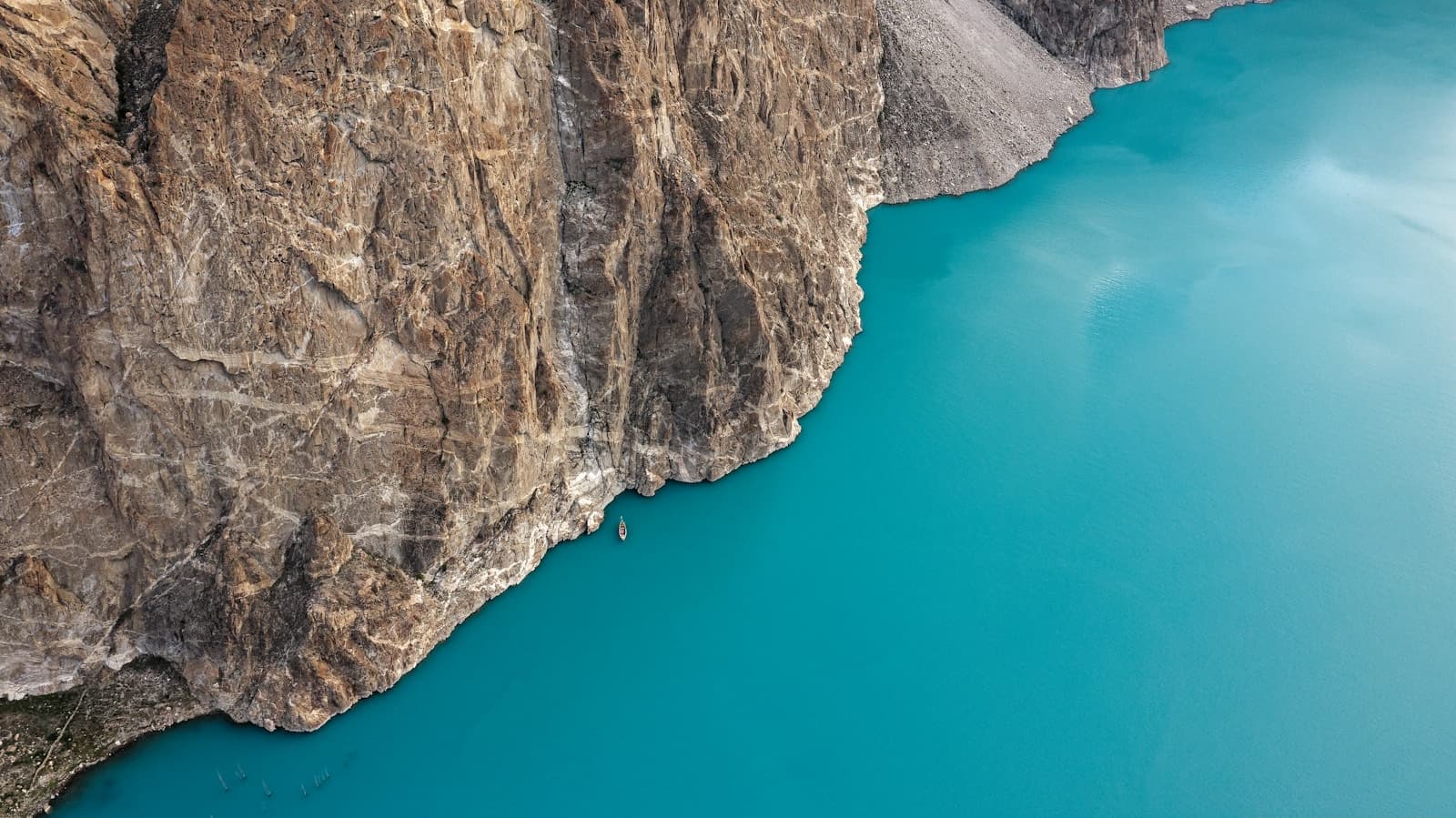
An accident of geology that became one of Pakistan's most-photographed places. In January 2010 a landslide blocked the Hunza River. What filled behind it was this.
About the Lake
A catastrophe that became
something beautiful.
On 4 January 2010, a section of the Attabad mountainside collapsed into the Hunza River. The landslide killed 20 people, buried the village of Attabad, and blocked the Karakoram Highway for five years. What the rising water left behind was a lake 9 kilometres long and up to 100 metres deep, with a colour that doesn't look entirely natural.
The turquoise is caused by suspended glacial sediment, the same geology that gives meltwater lakes their signature blue across the Himalayas and Karakoram. But at Attabad the colour is particularly intense, and the backdrop particularly dramatic: the grey rock walls of the gorge rise steeply on both sides, and on clear days the permanent snowfields of the upper valley are visible above them.
The Pakistani government eventually tunnelled five separate bores through the surrounding mountains to restore the KKH. The road now runs through the rock for 7 kilometres at the lake's far end. Emerging from the tunnel onto the lake's shore is one of the great surprise moments on the Karakoram Highway.
Practical Info
Getting there
and what to do.
Getting there
30 to 35km north of Karimabad on the KKH, about 45 minutes by road. The drive follows the Hunza River gorge and is itself spectacular. All Raahi Hunza itineraries stop at the lake. No permit is required.
Boating
Local operators run boat trips from the lakeside below the main viewpoint. A 30-minute circuit takes you out to where the colour is deepest. Rates are set by the operators and move with the season, so message us for the current one. Kayaks and paddleboats are also available. Go early morning for the best light and calmest water.
Best season
May through October. The lake is year-round but mountain roads to upper viewpoints can ice over in winter. Peak colour is June to August in clear summer light.
Combine with
Most visitors pair Attabad with a drive further north to Passu Cones and Gulmit, making a full-day upper Hunza excursion from Karimabad. The entire circuit takes 6 to 8 hours and covers some of the most dramatic scenery in Pakistan.
Common Questions
Before you go
answered honestly.
How was Attabad Lake formed?
Attabad Lake was created on 4 January 2010, when a massive landslide in Attabad village blocked the Hunza River. The rising water submerged villages, homes, and a long section of the Karakoram Highway. It took five years for the Pakistani government to tunnel through the surrounding mountains and restore road access. The lake has been a permanent geographical feature since then.
How far is Attabad Lake from Karimabad?
Approximately 30 to 35 kilometres north of Karimabad on the Karakoram Highway, about 45 minutes by road. The drive follows the Hunza River gorge through increasingly dramatic scenery. Most visitors combine Attabad with a day exploring the upper Hunza valley toward Gulmit and Passu.
Can you do boating on Attabad Lake?
Yes. Local boat operators run trips on the lake year-round during daylight hours. A standard 30-minute boat circuit goes out to the middle of the lake where the colour is most intense. Operators set their own rates and change them by season, so ask us on WhatsApp for the current price. Kayaks are also available for hire. Early morning is the best time for photographs: the light is soft and the water is calm.
What is the best time to visit Attabad Lake?
May through October. The lake is technically accessible year-round since the KKH tunnels are open, but the mountain roads leading to viewpoints above the lake can be icy in winter. June through September gives the best combination of colour intensity, weather, and activity availability. The lake's turquoise hue is at its most vivid in clear summer light.
Plan Your Visit
Add Attabad Lake to your Hunza itinerary.
Attabad Lake is included in all Raahi Hunza itineraries as a half-day or full-day excursion. We combine it with Passu Cones and Gulmit village on an upper Hunza circuit.
→Attabad Lake guide: full history, photography tips & what to expect→Hunza Valley: complete destination guide→Baltit Fort: the other unmissable stop in Hunza→Do Wadiyan: 10-day Skardu and Hunza tour→Things to Do in Hunza: kayaking, polo & more→Hunza in May: post-blossom season, best time for Attabad colours→Hunza in July and August: peak season guide→Hunza in August: warmest weather, all roads open→Hunza in September: autumn colours, fewer tourists→Hunza in June: snowmelt rivers and summer opening at Attabad→Hunza in October: autumn reflections at Attabad Lake→Plan a customized Hunza trip with our team
Plan Your Visit
Ready to visit Attabad Lake?
We'll build the itinerary.
Get in touch and we'll plan it around your dates, group, and pace.
Plan Your Trip