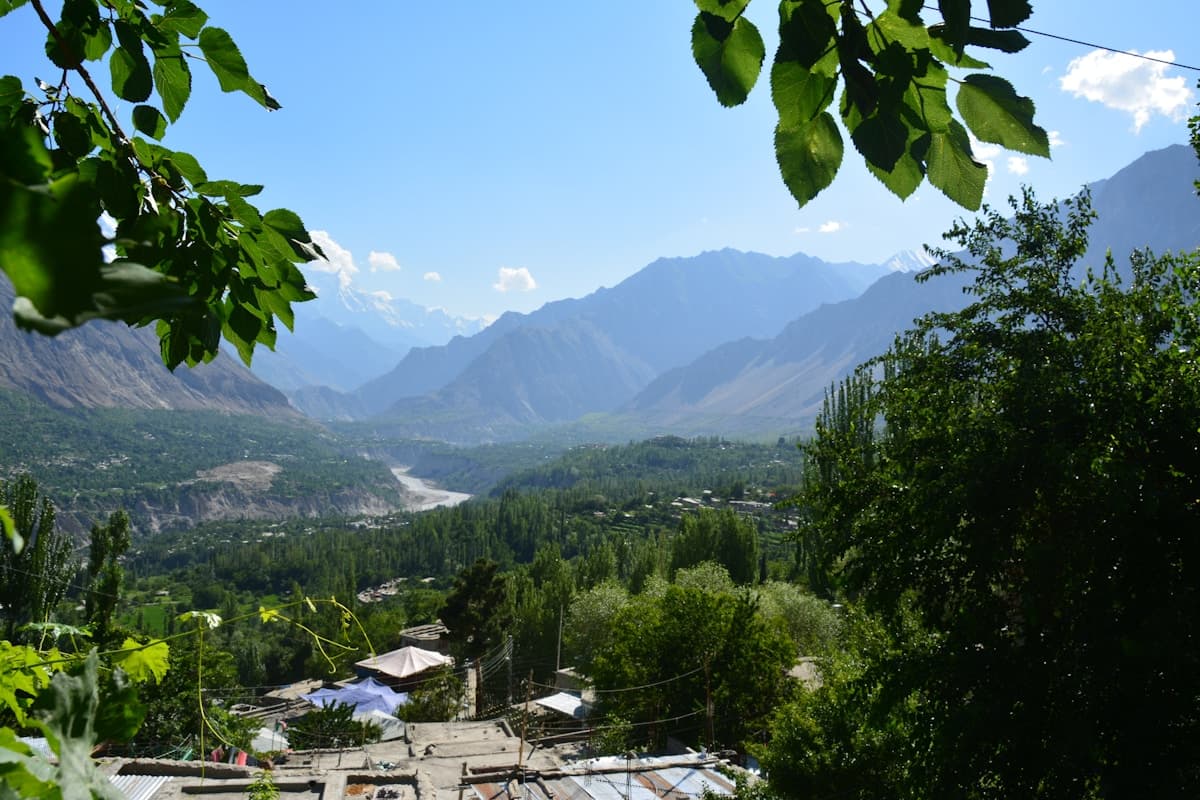
July and August are the busiest months in Hunza Valley, and also the most vivid. Every attraction is open, the roads are clear, the apricot orchards are heavy with fruit, and Attabad Lake's turquoise colour is at its most intense in direct summer light. If you can tolerate the crowds, and with the right approach, you can manage them, peak season is the best time to experience the full range of what Hunza offers.
Weather in July and August
Karimabad sits at 2,440 metres. July and August daytime temperatures reach 25 to 32 degrees Celsius in the valley bottom. Evenings cool to 15 to 18 degrees: warm enough for a light layer, not cold. Higher viewpoints are noticeably cooler: Eagle's Nest at 3,100 metres is typically 8 to 10 degrees cooler than the valley at any given time, which makes the pre-dawn drive more comfortable than you might expect.
Rain is possible in July and August from the fringes of the south Asian monsoon. It does not arrive with the intensity you see further east; expect occasional afternoon showers rather than sustained rainfall. Mountain visibility is excellent on clear mornings, the best views of Rakaposhi tend to be in the first two hours after sunrise before any haze builds.
Planning a trip to Hunza?
Rakaposhi, Attabad Lake, Baltit Fort, Raahi plans it privately, at the pace you want.
Free PDF with the daily breakdown, hotels, costs, and the routes we use. No spam. Unsubscribe in one click.
The orchards: apricots in season
April gets the attention for the apricot blossom, but summer is when the orchards actually produce. By late June the first apricots ripen at lower elevations; by July the harvest is in full swing. In Karimabad and Altit, flat rooftops are covered with drying apricots spread in the sun, the bright orange against whitewashed walls is one of the more distinctive summer images in the valley. Village lanes smell of ripe fruit. Fresh apricots are available in the bazaar for almost nothing. Dried apricots, apricot oil, and apricot kernels are the things most visitors take home.
Attabad Lake in summer
The turquoise of Attabad Lake is most vivid in direct sunlight, and July and August deliver the most consistent sunshine of the year. The lake, 45 minutes north of Karimabad on the Karakoram Highway, photographs differently in summer than in any other season: the water is a bright glacial blue-green against the grey rock of the valley walls. Boat rides are straightforward to arrange at the southern shore; the lake surface is calmest in the mornings before afternoon winds pick up.
Eagle's Nest: the summit of the summer experience
The viewpoint above Duikar village is at its best in summer. Five mountain ranges are simultaneously visible on clear mornings: Rakaposhi (7,788m) directly south, Ultar Sar and the Batura Muztagh to the north, the Hispar mountains to the east. The drive from Karimabad is 45 minutes on a rough road that requires a 4x4. Sunrise is the objective: the light on Rakaposhi from Eagle's Nest at 5am in July is the kind of image that defines a trip.
Crowds and how to manage them
Peak season is genuinely busy. Pakistani domestic tourism peaks in July and August when school holidays free up families. The Karimabad bazaar, Baltit Fort, and Eagle's Nest are all significantly more crowded than in shoulder months. Key mitigation strategies: be at Eagle's Nest before 6am, visit Baltit Fort when it opens (before 9am), and use the Hussaini Bridge and Passu Cones on weekdays rather than weekends. Accommodation books out weeks in advance in July and August, do not attempt to plan this trip without confirmed bookings.
What to book in advance
Everything with a fixed bed count. Eagle's Nest guesthouse has very few rooms and is the first to fill. Properties in Karimabad with valley-facing rooms book out in April and May for July and August. Shigar Fort Palace (if you are combining with Skardu) requires bookings months ahead. The rule for peak season Hunza: confirm your accommodation before you buy your flights.
July vs August: is there a difference?
Late July has the peak of orchard harvest and is marginally better for Attabad Lake photography (the water colour is most intense). August sees the highest tourist numbers, particularly on long weekends. Early August is indistinguishable from July in most practical respects. Either month works; the main distinction is that late August sees some early departure of domestic tourists as the school holidays wind down, making the final week of August slightly quieter than the first.
For a comparison with the quieter season, see our Hunza in October guide. Raahi runs tours throughout the summer season. Our tour listings include both Hunza-only and combined Skardu-and-Hunza itineraries for July and August departures. Book early: our summer dates fill up faster than any other period. Get in touch with your dates.
Frequently Asked Questions
What's the weather like in Hunza in July and August?
Daytime temperatures in Karimabad (2,440m) reach 25 to 32°C. Evenings are pleasant at 15 to 18°C. Higher viewpoints like Eagle's Nest (3,100m) are 8 to 10°C cooler. Rain is possible from monsoon fringes but usually brief afternoon showers rather than sustained rainfall. Mountain visibility is best in the early morning.
Is Hunza crowded in peak season?
Yes, July and August are the busiest months, driven by Pakistani domestic tourism during school holidays. Eagle's Nest, Baltit Fort, and Attabad Lake are noticeably busy, especially on weekends. Early mornings are dramatically quieter than mid-morning onwards. Accommodation books out weeks in advance; confirm all bookings before travelling.
Can I visit Khunjerab Pass in July?
Yes. Khunjerab Pass (4,693m) is open from approximately May 1 to October 31. July is one of the most reliable months: the road is clear, the weather is settled, and there is no risk of early-season snow closure. The drive from Karimabad to the pass and back takes a full day (8 to 10 hours including stops). See our tour listings if you want to combine it with a wider Hunza itinerary.