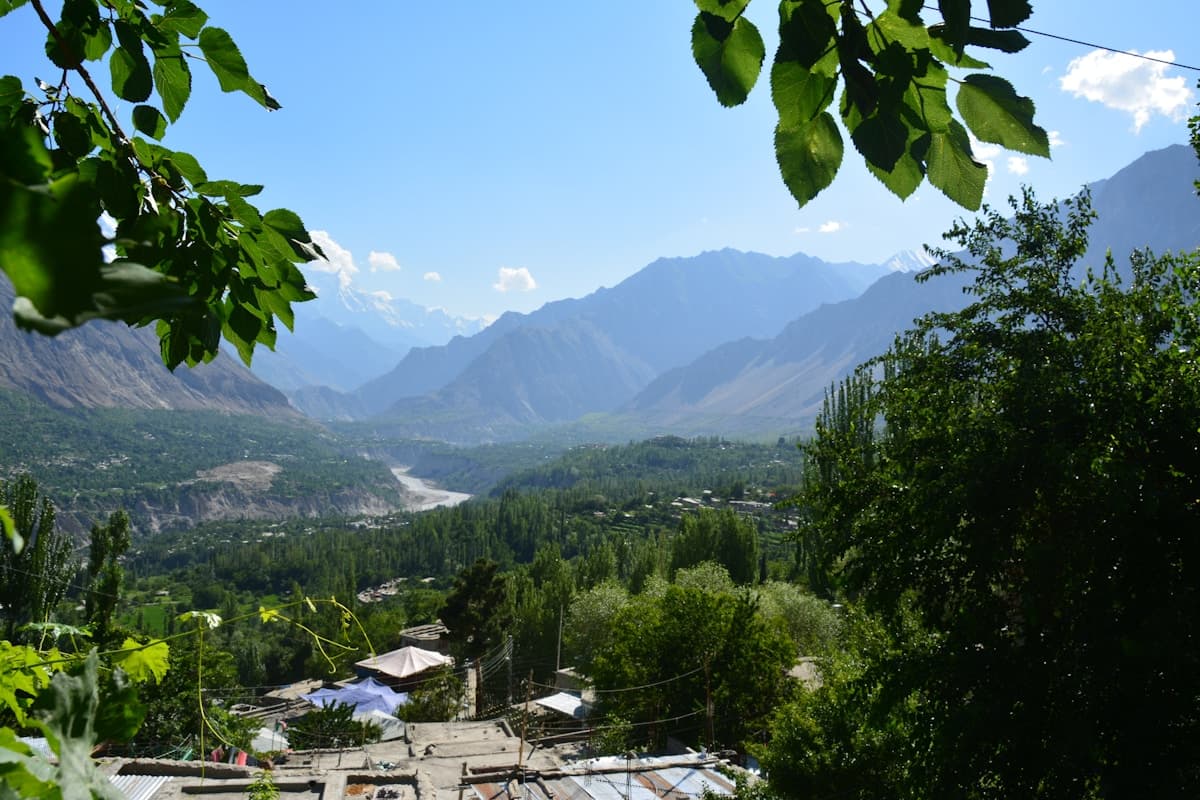
July and August get the attention in Hunza Valley: peak crowds, vivid colour, everything open. But if you ask people who travel in GB regularly which month they prefer for Hunza, most will say September. The wildflowers are gone, but the valley trades them for something different, and, depending on what you want from a mountain trip, better.
The weather in September
September days in Hunza sit between 18 and 26 degrees Celsius. Warm enough to walk comfortably without the heat that characterises mid-August in the valley, cool enough to want a jacket in the evenings. Nights drop to 8 to 12 degrees: fleece territory, not cold. The air is drier than in August; mountain views tend to be cleaner and the visibility longer.
Rain is uncommon in September. The late-summer humidity that occasionally clouds summer views has cleared, and the sky over Rakaposhi and Ultar Sar in September morning light is one of the more photogenic things in the valley. Early morning mist in the orchard valleys burns off by 9am on most days.
Planning a trip to Hunza?
Rakaposhi, Attabad Lake, Baltit Fort, Raahi plans it privately, at the pace you want.
Free PDF with the daily breakdown, hotels, costs, and the routes we use. No spam. Unsubscribe in one click.
Harvest season: what changes on the ground
September is when Hunza's agricultural calendar peaks. Apricots, the valley's signature crop, have already been harvested and are drying on flat rooftops across Karimabad, Altit, and the villages above. The smell of drying apricots in the mountain air is specific to this season and to this valley. Walnuts ripen in September; the trees along the older village lanes are heavy with them.
Walking through Altit village or the old lanes above Karimabad in September puts you in a working agricultural season that July's tourist-focused visits don't replicate. Stalls along the road sell dried apricot, walnut, and mulberry in quantities and at prices that reflect the harvest surplus rather than tourist markup. It is the most practical time to buy and bring home the food products Hunza is actually known for.
Early autumn colour
The poplar and willow groves that line the irrigation channels through the Hunza terraces begin turning gold in late September, usually the last ten days of the month. This is the very beginning of the autumn colour season that October is famous for (see our Hunza in October guide). If you travel in the second half of September, you get the overlap: harvest season still active, first colour appearing in the lower orchards, and quieter conditions than October's second wind of visitors who come specifically for the foliage.
Significantly fewer tourists
Peak season in Hunza ends with August. Pakistani school holidays are over; domestic tourism drops sharply. International visitors are also fewer. The practical results: Baltit Fort has no queue. Eagle's Nest at sunrise has perhaps a handful of people, not a crowd. The old village lanes in Altit are quiet. Attabad Lake's boat rides are bookable without a wait. Accommodation in Karimabad is available with shorter notice than peak season.
For any kind of focused photography, this shift is significant. The same viewpoints you would share with forty people in August, you can have largely to yourself in September.
All attractions still fully open
Everything that is open in peak summer remains open in September. Eagle's Nest at Duikar is accessible by 4x4 through at least October. Baltit and Altit Forts operate normal hours. The Karakoram Highway is clear. Attabad Lake boat operations continue. Passu and the upper valley are fully accessible. There are no closures or reduced services in September that would constrain an itinerary built for summer.
September for photography
The harvest scenes, apricots on rooftops, the agricultural activity in the villages, the first poplar gold, are the strongest photography subjects that September adds to the standard Hunza visual library. Combined with the lower-angled September light (warmer tones, longer shadows than midsummer), the valley photographs well at every hour. Eagle's Nest at dawn in September, with the first touch of autumn colour in the orchards below and clear mountain profiles in every direction, is one of the finer mornings available in Pakistan.
Planning a September Hunza trip
September is our recommendation for most first-time visitors to Hunza who have flexibility in their dates. The full valley experience, forts, Eagle's Nest, Attabad Lake, upper Hunza, is available without the peak-season accommodation pressure or crowd management that July and August require. Our Do Wadiyan 9-day itinerary includes Hunza and works well in September. For Hunza on its own, the 5-day Hunza itinerary covers the complete valley. Tell us your September dates and we will put together the right plan.
Frequently Asked Questions
Is September a good time to visit Hunza Valley?
Yes, one of the best. September combines comfortable temperatures (18 to 26°C), lower crowds than peak summer, harvest season activity in the villages, the beginning of autumn colour in the poplar groves, and all attractions still fully open. It is our recommendation for most travellers who have flexibility in their dates.
What is Hunza like in September compared to summer?
Quieter, cooler, and in its harvest season. The wildflower alpine meadows of July give way to apricots drying on rooftops, walnuts ripening, and the first gold appearing in the poplar groves by late September. Mountain views are often cleaner than in August, when summer haze can reduce visibility. The core attractions, Baltit Fort, Eagle's Nest, Attabad Lake, are unchanged.
Does autumn colour start in Hunza in September?
The first colour appears in the lower orchards and poplar groves in the last 10 to 15 days of September. The full autumn display peaks in October. If you want both harvest season and the beginning of autumn colour in one trip, the last week of September is the overlap window. For the full October colour season, see our Hunza in October guide.