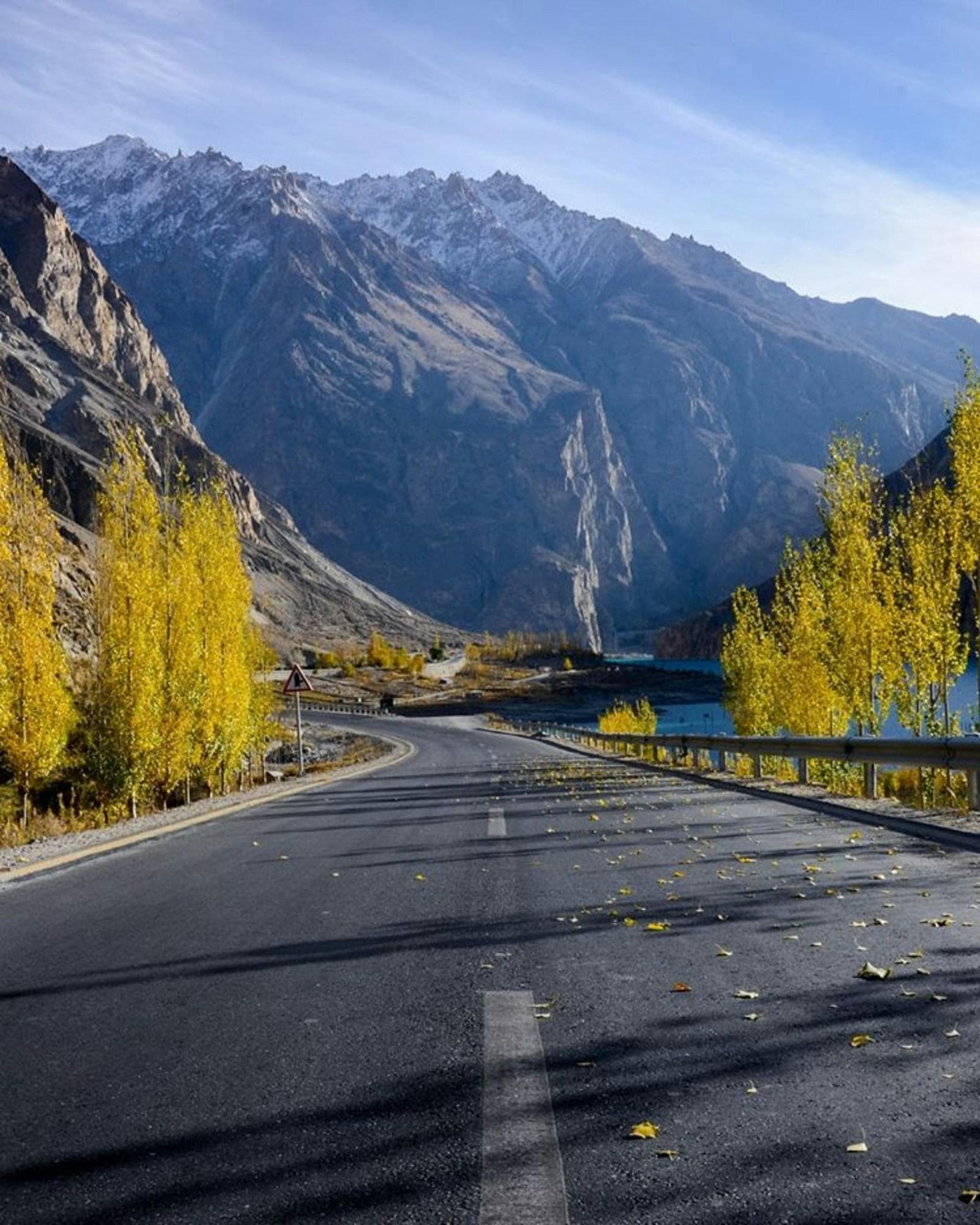
Five days in Hunza is enough to cover everything that matters without rushing. This itinerary is built around private transport (standard for our tours) and staying in Karimabad. Adjust for your pace: if you want slower mornings or an extra day in one place, build it in.
Day 1: Arrival and Karimabad orientation
Most guests arrive by road from Islamabad (14-16 hours) or fly to Gilgit (45 minutes) and drive to Hunza (1 hour). Arrive in Karimabad by early afternoon if you flew; by evening if you drove. Settle in and walk the old bazaar at dusk: the light on Ultar Sar at golden hour from the main lane is your introduction to what the next five days look like. Dinner in town. Early night if you drove.
Day 2: Baltit Fort, Altit Fort, and Altit village
Start at Baltit Fort when it opens (8am or 9am depending on season). Allow two hours inside: the rooms, the watchtowers, the roof view across the valley. Come down and walk the 3 kilometres south to Altit Fort, stopping in the old Karimabad lanes on the way. Altit Fort is older, less restored, and often empty. The village below it is one of the finest historical settlements you will see in Pakistan. Lunch in the village or back in Karimabad. Afternoon free for the bazaar, apricot orchards, or the lane walk up toward Ultar Glacier.
Planning a trip to Hunza?
Rakaposhi, Attabad Lake, Baltit Fort, Raahi plans it privately, at the pace you want.
Free PDF with the daily breakdown, hotels, costs, and the routes we use. No spam. Unsubscribe in one click.
Day 3: Eagle's Nest sunrise and Attabad Lake
Leave for Eagle's Nest at 5am for sunrise. The drive to Duikar is 45 minutes on a rough road: a 4x4 is essential. At 3,100 metres with five mountain ranges lit by the first light, this is one of the most reliably striking viewpoints in Gilgit-Baltistan. Back to the hotel by 8am for breakfast. Drive to Attabad Lake after breakfast (45 minutes). Boat ride on the turquoise lake, lunch at one of the lakeside restaurants, and back by late afternoon. The tunnels through the 2010 landslide are on this route both ways.
Day 4: Upper Hunza, Passu Cones, and Hussaini Bridge
Drive north to Gulmit and Passu (1.5 hours). The Passu Cathedral Peaks come into view as you clear a bend in the road: sharp rock spires rising directly from the valley floor. Stop for photos. Walk to the Hussaini Bridge: the suspension bridge over the Hunza River is one of the more memorable experiences on this route, less for danger and more for the view back to the Passu Cones from the far bank. If time allows, take the short hike to Borith Lake above Gulmit. Return via the Rakaposhi Viewpoint near Minapin for the clearest view of the mountain. Back by early evening.
Day 5: Slow morning, Karimabad, departure
Leave time for anything you missed or want to revisit: the bazaar, a walk below Baltit Fort, a longer sit at a cafe with the Ultar Sar view. Departures from Karimabad: drive to Gilgit for a flight out (1 hour), or start the road journey back to Islamabad (14-16 hours, usually overnight). If you are connecting to Skardu, the drive via Gilgit takes around 6.5 hours and can be done on this day.
Practical notes
Getting there: Most travellers fly to Islamabad and drive (or fly to Gilgit). The Karakoram Highway is one of the world's great mountain drives.
When to go: April for apricot blossom, June-September for warmth and full access, September-October for fewer crowds and autumn colour. See our full Hunza season guide.
Transport: You need a private 4x4 or jeep for Eagle's Nest and upper Hunza. We use Land Cruiser Prado as standard on all Raahi itineraries.
Hotels: Karimabad has a range from guesthouses to mid-range hotels. Book in advance for July-August peak season.
Extending beyond 5 days
If you have more time, the most natural extension is combining Hunza with Baltistan. The Do Wadiyan itinerary covers Skardu, Shigar, Khaplu, and Hunza in 10 days: fly into Skardu, explore Baltistan for five nights, drive to Hunza for four nights, and exit by road. This is the itinerary we recommend most to travellers who want the full picture of Gilgit-Baltistan in one trip.
For specific activities to fill each day, see our things to do in Hunza guide. For planning the Attabad Lake day in detail, see the Attabad Lake guide. If you want Raahi to plan your Hunza trip, get in touch with your dates and group size. We will build an itinerary around what matters to you.
Frequently Asked Questions
Is 5 days enough for Hunza Valley?
Yes, comfortably. Five days covers Baltit Fort, Altit Fort, Eagle's Nest at sunrise, Attabad Lake, Passu Cones, and the Hussaini Bridge, with time for a slow morning in Karimabad. A sixth day adds Borith Lake or more time in upper Hunza without rushing.
What is the best season for a Hunza itinerary?
April for apricot blossom, June through August for warm weather and full access, or September and October for autumn colour, lower crowds, and cooler temperatures. Eagle's Nest is accessible May through October. This 5-day itinerary works across all seasons.
Do I need a guide for Hunza Valley?
Not strictly required, but a local driver who doubles as a guide makes a significant difference. The Eagle's Nest road requires a 4x4 and local knowledge. Context about the forts, Hunzakut history, and mountain geography enriches the visit considerably.
How much does a 5-day Hunza trip cost?
Budget guesthouses and shared transport: roughly PKR 30,000 to 50,000 per person (around USD 100 to 175). Mid-range with a private vehicle and decent hotel: PKR 80,000 to 150,000 per person. Raahi's private tours are priced per itinerary based on group size and hotel preference, get in touch for a quote.