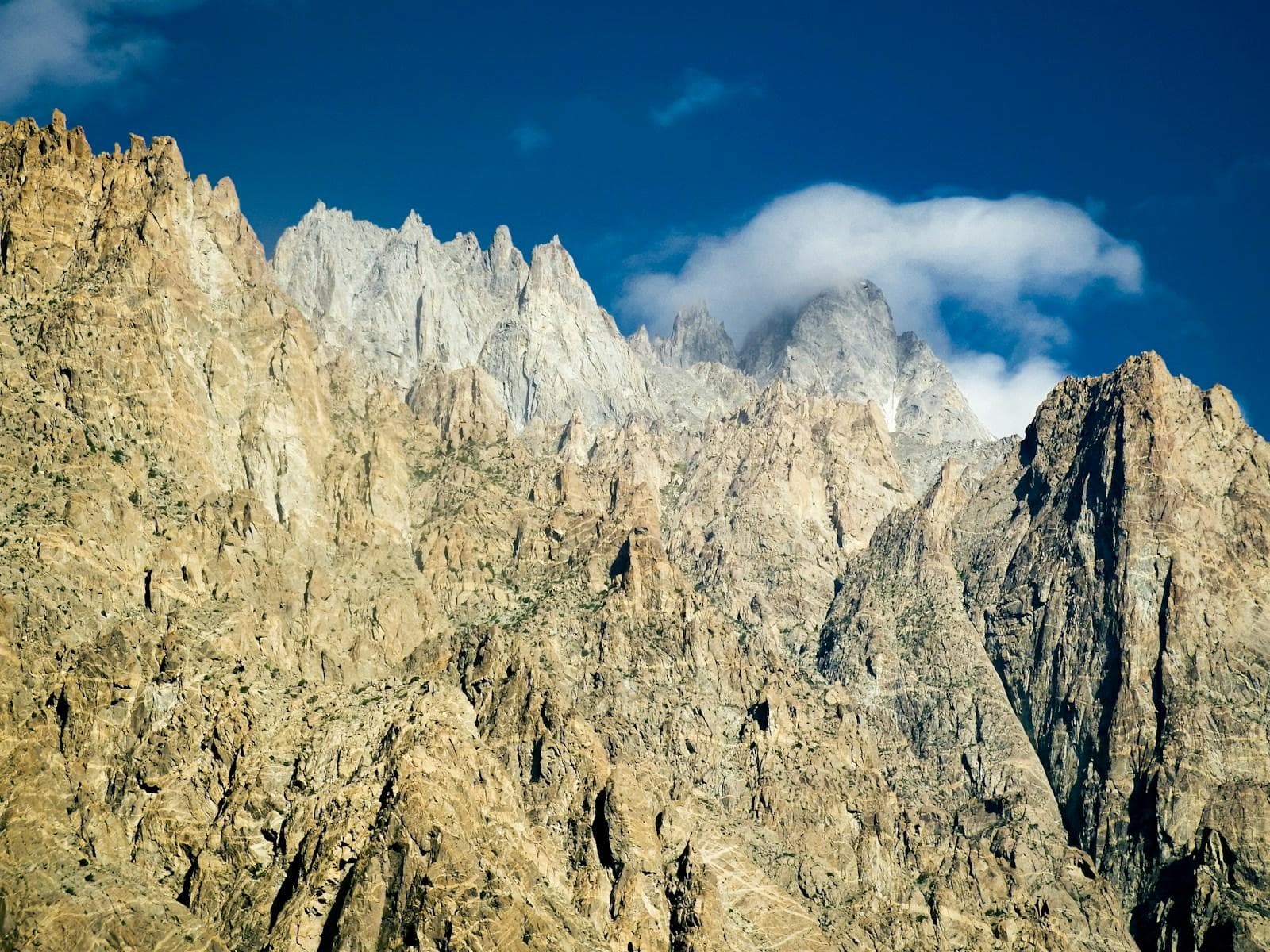
Khaplu sits 110 kilometres east of Skardu, three hours along the Shyok River on a road that grows more dramatic with every bend. Most travellers skip it entirely, which is their loss and, depending on your perspective, part of its appeal. Khaplu has a restored royal palace that is arguably the most historically intact of all the Balti heritage hotels, a gateway to the Hushe Valley and K6/K7 base camps, and a pace of life that reflects eastern Baltistan at its most unaltered. This guide covers everything worth knowing before you go.
Khaplu Palace: the main reason to come
Khaplu Palace, a Serena Heritage property, like Shigar Fort Palace, is a 700-year-old Balti royal fort restored by the Aga Khan Trust for Culture. The restoration is meticulous: carved wooden balconies, original floor layouts, and a garden with the Shyok Valley below and the Karakoram above. The hotel has a small number of rooms inside the historic structure and some modern cottages in the grounds.
Unlike Shigar Fort Palace, which now sees a steady flow of day visitors and overnight guests, Khaplu Palace often has the feeling of somewhere discovered rather than developed for tourism. The staff-to-guest ratio is high; the evenings are quiet; the breakfast terrace view is not shared with a crowd. If you want the heritage hotel experience without the comparative busyness of Shigar, Khaplu is the answer.
Getting to Khaplu?
The drive, the palace, and the Hushe Valley, we arrange all three as part of a private Baltistan circuit.
Free PDF with the daily breakdown, hotels, costs, and the routes we use. No spam. Unsubscribe in one click.
Day visits to the palace grounds and museum are available with a small entry fee for those not staying overnight.
Chaqchan Mosque
In the old bazaar area below the palace, the Chaqchan Mosque dates to 1370 and is one of the oldest surviving mosques in Pakistan. The architecture is Central Asian in character, carved wooden columns, painted ceilings, a layered roof structure, with local Balti craftsmanship layered through it. It is still an active place of worship. Visit respectfully: outside of prayer times, visitors are generally welcome with appropriate dress and an unhurried approach.
Hushe Valley
From Khaplu, the Hushe Valley branches north for about 60 kilometres to Hushe village at 3,150 metres, the base for expeditions to K6 (7,282m), K7 (6,934m), Masherbrum (7,821m), and the Gondogoro La crossing (5,585m). The drive up the valley is itself an experience: the road follows the Hushe River through a tightening gorge until the peaks fill the frame above the village.
Non-trekkers drive to Hushe village, walk along the river, and return to Khaplu in a full day, with 4 to 6 hours of driving in total. Trekkers use Khaplu as the base for multi-day approaches into the range. Raahi can arrange transport to the trailhead and guide introductions for those heading further. See our trekking support page for details.
The drive from Skardu
The Skardu-to-Khaplu road follows the Shyok River for most of its length. The terrain is arid and the river cuts through increasingly severe canyon sections as you move east. Driving time is 2.5 to 3 hours in good conditions. The road is paved for most of its length but has rough sections near the river crossings. A standard 4x4 handles it comfortably; the route does not require a specialist vehicle.
The drive itself is often cited by guests as one of the better parts of an eastern Baltistan trip. The Shyok River valley at this scale, raw canyon walls, a wide braided river, the Karakoram framing the horizon, is a different landscape register from the more enclosed valleys around Skardu.
Best time to visit
June through September is the reliable season. The road from Skardu is open year-round in normal conditions, but spring flooding can close some river sections in April and May. October is possible but accommodation availability in Khaplu drops quickly as the season ends. July and August are peak season for the Hushe Valley. For the palace and town, shoulder season (June and September) offers the same experience with fewer visitors.
How to fit Khaplu into a Skardu trip
Most travellers do Khaplu as a 1 to 2-night extension from Skardu: drive out one morning, overnight at the palace, do the Hushe Valley the following day, and return to Skardu. This is the structure we use in our Khwab Retreat (5-day itinerary), which includes Khaplu as the easternmost point before continuing west. Our Aangan Retreat (7-day itinerary) builds more time in eastern Baltistan.
If you are planning a Skardu trip and want to include Khaplu, contact us with your dates. For the full Skardu district context, the 5-day Skardu itinerary shows how Khaplu fits into a broader Baltistan trip. For activities in the city itself, see the Skardu activities guide. The logistics, 4x4 transport, palace booking, Hushe Valley timing, are the kind of thing we handle as part of every trip we organise.
Frequently Asked Questions
Is Khaplu worth visiting from Skardu?
Yes. Khaplu Palace is the most historically intact of Baltistan's three heritage hotels, the Hushe Valley drive beyond Khaplu is one of the finest mountain road experiences in Pakistan, and the reduced tourist numbers mean the experience is more authentic than comparable stops on the standard Skardu circuit. The 3-hour drive is the commitment; the rewards justify it for anyone with more than 4 nights in Baltistan.
How should I fit Khaplu into a Skardu trip?
Most travellers do Khaplu as a 1 to 2-night extension: drive out in the morning, overnight at the palace, drive the Hushe Valley the following day, return to Skardu. This is the structure in our Khwab Retreat (5-day itinerary). For a deeper eastern Baltistan focus, the Aangan Retreat (7 days) builds more time there.
What should I not miss in Khaplu?
Khaplu Palace, the heritage hotel grounds and museum are the main draw. The Chaqchan Mosque in the old bazaar: dating to 1370, one of the oldest in Pakistan and architecturally extraordinary. The Hushe Valley drive north from Khaplu: about 60 kilometres toward K6 and K7, ending at Hushe village at 3,150 metres with Karakoram peaks filling the frame above.
How far is Khaplu from Skardu, and how long does the drive take?
Khaplu is 110 kilometres east of Skardu, about 3 hours by road. The route follows the Shyok River through canyon terrain for most of its length. It is paved for most of the way with some rough sections near river crossings; a standard 4x4 handles it comfortably.