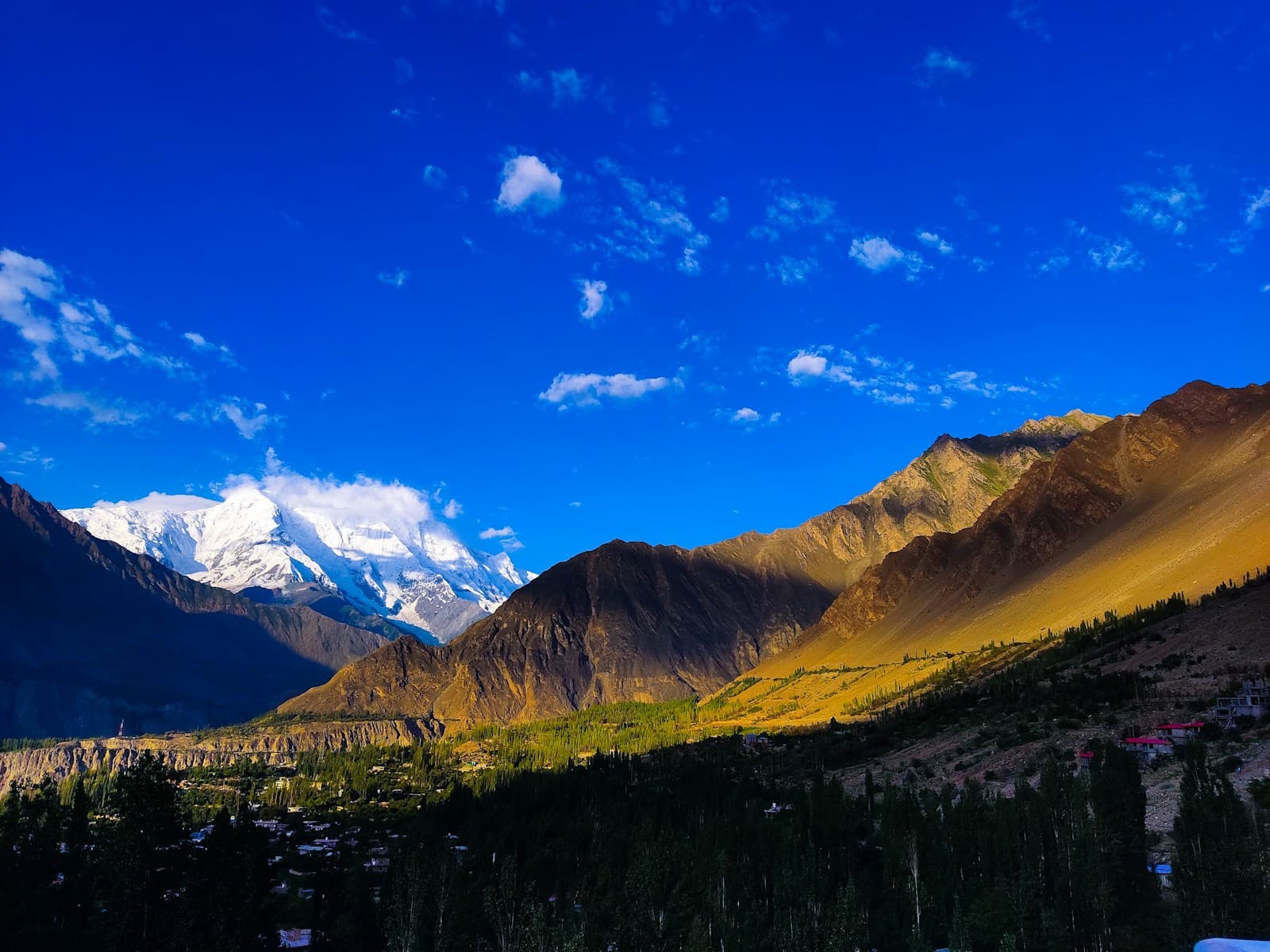
Altit Fort is the oldest surviving building in Gilgit-Baltistan. Estimates place the earliest sections at over 1,000 years old, with some parts dating to the 11th century. It sits above Altit village, 4km south of Karimabad on a cliff edge directly above the Hunza River. It predates Baltit Fort by several centuries and was the original seat of the Mirs of Hunza before they relocated to Baltit. Most visitors arriving in Hunza go straight to Baltit. That is understandable. But the ones who also visit Altit almost always say the same thing: they should have come here first.
History
Before Baltit became the primary seat of power in the valley, Altit was the centre. The Mirs of Hunza ruled from this fort, and the surrounding village of Altit was one of the principal settlements of early Hunza. When the Mirs eventually moved their residence to Baltit, probably in the 14th or 15th century, Altit's political importance diminished, but the fort and village remained occupied and maintained.
The fort was restored by the Aga Khan Trust for Culture, the same organisation responsible for the restoration of Baltit Fort in the 1990s. The work at Altit was completed in the 2000s. The result is a functioning heritage museum with original artefacts, royal household items, and period-accurate furnishings across several rooms. Unlike some restored forts in Pakistan where the interpretation is thin, Altit's interiors give a convincing sense of how the space was actually used.
Ready to plan your trip?
Tell us where you want to go and how long you have. We build the itinerary around what matters to you.
Free PDF with the daily breakdown, hotels, costs, and the routes we use. No spam. Unsubscribe in one click.
The Structure
The fort's most striking feature is its position: it juts out from a cliff edge with a sheer drop of several hundred metres directly to the Hunza River below. The main building is a tower of approximately eleven storeys, with a royal courtyard attached. A watchtower extends furthest over the cliff and gives the most vertiginous views in Hunza, looking straight down to the river, and across the valley to the peaks on the far side.
The views from the watchtower are not like anything else in the valley. At Eagle's Nest or from Baltit Fort, you are looking across a broad panorama. At Altit's watchtower, you are looking straight down. The cliff drops away directly beneath you. The Hunza River is a thin line hundreds of metres below. It is the kind of view that takes a moment to fully register.
Inside, the rooms are layered across the tower's height, each with low ceilings and thick stone walls. The royal bedchamber, audience rooms, and storage areas are all preserved and interpreted. The woodwork, carved beams, doorframes, and brackets, is among the finest traditional craftsmanship surviving in Gilgit-Baltistan.
Altit Village
The old village below the fort is one of the best-preserved traditional settlements in Hunza. Where Karimabad's lower town has been reshaped by the modern bazaar, hotels, restaurants, gemstone shops, tourist infrastructure, Altit village has remained largely as it was. The lanes are narrow, unpaved, and flanked by stone walls. Wooden doorways with traditional carved detailing open onto small courtyards. Apricot trees grow between the houses.
Walking through the village before or after the fort is worth doing slowly. It gives a sense of how the valley looked before Karimabad developed into a tourist hub. The conservation work here has been lighter-touch than the fort itself, which is part of what makes it feel authentic rather than curated. Allow 20 to 30 minutes to walk the main lanes. There is no formal route, just follow the paths that lead uphill.
Altit Fort vs Baltit Fort
This is the question most visitors arrive with, and the honest answer is that they offer different things.
- Age: Altit is significantly older. Some sections date to the 11th century. Baltit is around 900 years old, still impressive, but Altit predates it by several centuries.
- Setting: Altit is more dramatic. The cliff-edge position and the direct drop to the Hunza River have no equivalent at Baltit, which sits on a promontory above Karimabad rather than on a sheer drop.
- Visitor numbers: Altit is quieter. Most Hunza visitors go to Baltit and either skip Altit or add it as an afterthought. You are unlikely to share the watchtower with a crowd.
- Village context: The old village at Altit is more intact than the area around Baltit Fort, where modern Karimabad has encroached. Altit gives a better picture of how traditional Hunza settlements functioned.
- Accessibility: Baltit wins on this. It is a 20-minute walk from Karimabad bazaar. Altit requires a 10 to 15-minute drive or a 45 to 60-minute walk.
- Visitor infrastructure: Baltit has more around it, the Karimabad bazaar, restaurants, and shops are immediately adjacent. Altit is quieter in every sense.
The practical answer for most travellers: see both. They are 4km apart. A combined morning, Altit first, Baltit after, is entirely manageable and gives a much fuller picture of Hunza's history than either fort alone. The 5-day Hunza itinerary includes both in a sensible sequence.
Getting There
Altit is 4km south of Karimabad, 10 to 15 minutes by car on the road that drops from the main bazaar toward the river, then follows the valley wall south. Almost all visitors drive. Your hotel can arrange a vehicle and driver, or you can hire a local jeep from the Karimabad bazaar.
It is also possible to walk. The old trail descends from Karimabad to Altit in about 45 to 60 minutes, mostly downhill. The return journey is steeper and takes longer, allow 60 to 75 minutes back up. If you are in reasonable condition and have the time, the walk down through the orchards and old paths is worth doing at least one way. Take the road back up unless you have accounted for the climb.
Entry to the fort requires a ticket, purchased at the gate. The ticket price is modest and goes toward the ongoing maintenance of the site.
Photography
The fort faces generally east, which means morning light catches the stonework well. The watchtower over the cliff is the primary shot, from below the fort looking up, the tower appears to grow directly out of the rock face. From the watchtower itself, the view straight down to the river and across the valley is worth shooting at any time of day, though morning haze is often lower.
The old village lanes are good in soft light, early morning or late afternoon. The carved doorways and apricot trees photograph well when the light is low and directional rather than flat midday overhead.
How Long to Spend
Budget 1.5 to 2 hours for the fort and a proper walk through the old village. If you are walking from Karimabad rather than driving, add the walking time to both ends, total around 2.5 to 3 hours from Karimabad bazaar and back.
Most visitors combine Altit with Baltit Fort in a single morning, with Altit first and Baltit second (or the reverse). This works well. Both forts together take a half-day comfortably, with time left in the afternoon for the Eagle's Nest at sunset or a walk through Karimabad's old town. For broader planning, see the full guide to things to do in Hunza and our suggestions on where to stay in Hunza.
Frequently Asked Questions
Where is Altit Fort located?
Altit Fort is in Altit village in Hunza Valley, Gilgit-Baltistan, northern Pakistan. It sits 4km south of Karimabad, on a cliff edge directly above the Hunza River, a 10 to 15-minute drive from the Karimabad bazaar. The nearest airport is Gilgit, roughly 3 hours away by road on the Karakoram Highway.
Is Altit Fort worth visiting?
Yes, particularly if you are already visiting Baltit Fort. Altit is the older of the two, over 1,000 years old compared to Baltit's approximately 900, and its cliff-edge position above the Hunza River is more dramatic. It is quieter and less visited than Baltit, which makes the experience more relaxed. The old village below the fort is also better preserved than the area around Baltit. The two forts are 4km apart and a combined morning is straightforward.
What is the difference between Altit Fort and Baltit Fort?
Altit is older (some sections date to the 11th century; Baltit is around 900 years old) and was the original seat of the Mirs of Hunza before they moved to Baltit. Altit sits on a sheer cliff directly above the Hunza River, the drop from the watchtower to the river below is several hundred metres, which gives it a more dramatic physical setting. Baltit is better known, more centrally located in Karimabad, and has more tourist infrastructure around it. Visitor numbers at Altit are lower. Both have been restored by the Aga Khan Trust for Culture.
How do I get to Altit Fort from Karimabad?
Altit is 4km south of Karimabad, a 10 to 15-minute drive on the road that drops from the main bazaar and follows the valley wall south. Most visitors hire a vehicle from the bazaar or arrange one through their hotel. It is also possible to walk the old trail in about 45 to 60 minutes downhill from Karimabad; allow 60 to 75 minutes for the return uphill. Entry to the fort requires a ticket purchased at the gate.