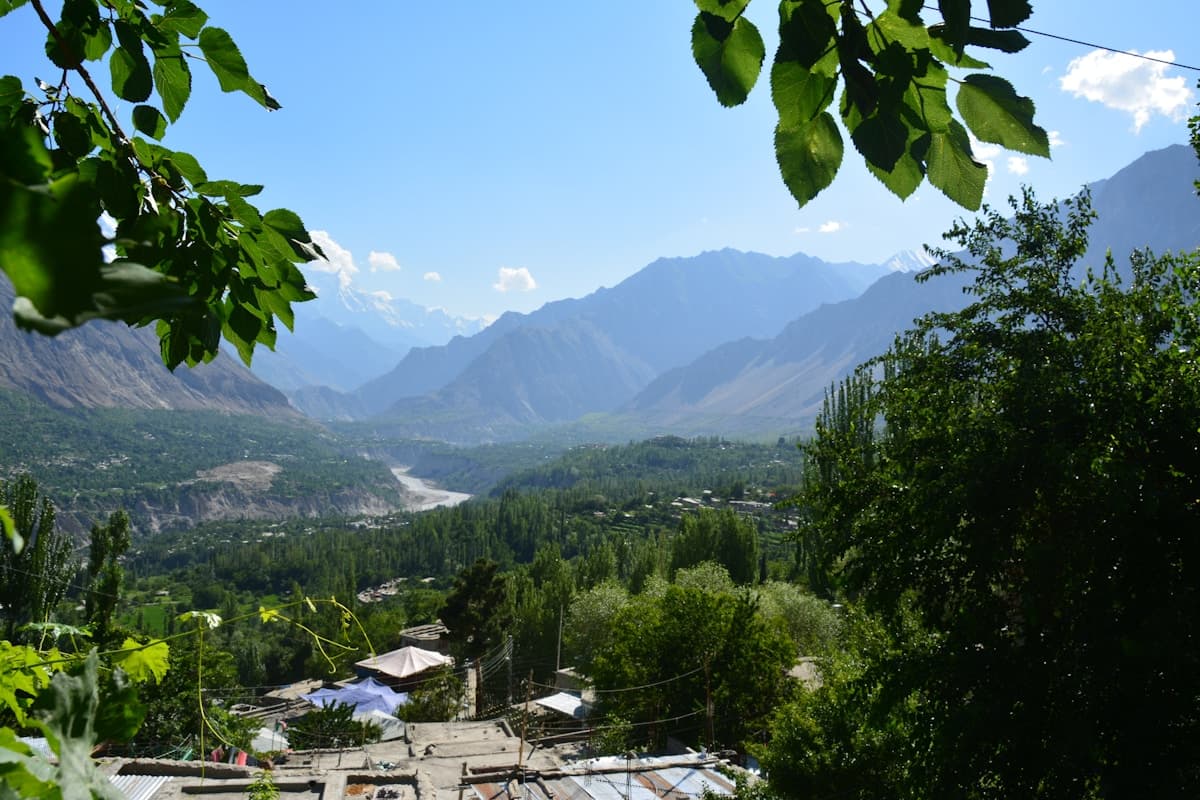
Most travel content about Gilgit-Baltistan tells you where to go and when. This one is about the things that catch first-time visitors off guard, practical, cultural, and logistical realities that itinerary guides tend to skip. Read it before you book.
The visa situation is simpler than you think
Pakistan operates a visa-on-arrival scheme for citizens of many countries, and an e-visa system for most others. The process is significantly more straightforward than the reputation suggests. Citizens of the UK, EU, US, Canada, Australia, and most Gulf states can apply online and receive approval within a few days. The visa is valid for 30 days with the option to extend.
The one thing to check: No Objection Certificates (NOCs) were previously required for travel to certain restricted areas near the Chinese border (Khunjerab Pass, Shimshal). Regulations change, so confirm the current requirement for your nationality before travel. For standard Skardu and Hunza itineraries, everything most travellers do, no NOC is required.
Planning a trip to Skardu?
Private 4×4, boutique hotels, and a day-by-day itinerary built around what you want to see.
Free PDF with the daily breakdown, hotels, costs, and the routes we use. No spam. Unsubscribe in one click.
Cash is king; cards are unreliable
This is the practical reality that surprises most first-timers. ATMs exist in Skardu city, Gilgit, and Karimabad, but they are not always stocked, connectivity is intermittent, and foreign cards are hit or miss depending on the network. In Shigar, Khaplu, Deosai, or anywhere off the main towns, there are no ATMs at all.
The correct approach: withdraw Pakistani rupees in Islamabad (the airport has reliable ATMs immediately after customs) before your onward flight. Bring enough for your full trip. Heritage hotels like Shigar Fort Palace accept cards; most guesthouses, local restaurants, and bazaar vendors do not. Budget for cash from the start and you will have no problems.
Altitude is real and will catch you if you ignore it
Skardu sits at 2,228 metres. Deosai National Park is at 4,114 metres. Eagle's Nest above Hunza is at 3,200 metres. Most travellers arrive from sea level or low altitude and feel fine for the first day, then do not sleep well, get a headache, or feel inexplicably tired. This is normal and manageable.
The rules: drink more water than you think you need (double your normal intake). Avoid alcohol for the first two days. Do not plan your most physically demanding day on day one. Ascend gradually where possible: flying directly to Skardu and immediately driving to Deosai on the same afternoon is a common mistake. Give your body 24 hours at Skardu's elevation before gaining more altitude. If symptoms are severe (persistent vomiting, confusion, loss of coordination), descend immediately.
Cultural norms: straightforward, not complicated
Gilgit-Baltistan is a Muslim-majority region. The cultural norms are not difficult to navigate; they just require a small amount of attention that most travellers from secular-dominant countries are not used to applying.
Dress: Women should cover shoulders and knees in public, particularly in smaller towns and villages. A loose shawl or scarf is worth carrying and costs almost nothing. Men in shorts are fine in Skardu city and tourist areas, though trousers are more appropriate in village settings. This is less about strict rules and more about showing awareness.
Photography: Always ask before photographing people, particularly women. In most of GB this is well-received, Baltis and Hunzakuts are generally warm to visitors, but asking first is the correct default. Landscapes, architecture, and open public spaces are fine without asking.
Food and drink: Alcohol is not available in GB. This is not a negotiation or a grey area: there is no alcohol in restaurants, guesthouses, or shops. Come prepared for this and it is a non-issue. The food is excellent without it: local trout, apricot-based dishes, freshly baked bread, and the best dried fruit you will find anywhere.
Ramadan: If your trip overlaps with Ramadan, be aware that eating and drinking in public during daylight hours is considered disrespectful. Most tourist-oriented hotels will provide breakfast in a private setting. Outside tourist areas, eat inside during daylight.
What will actually surprise you (the good kind)
The hospitality. It is the single thing that every first-time visitor to GB mentions and that no amount of reading fully prepares you for. You will be invited for tea in places you stopped only to ask directions. Strangers will go out of their way to help you find something. Guesthouse owners will feed you dinner they were not contractually required to provide. This is not performance for tourists, it is the normal register of interaction here.
The scale of the landscape. Even travellers who have been to the Alps, the Rockies, or the Andes are consistently unprepared for the sheer vertical scale of the Karakoram. The mountains do not just sit on the horizon; they rise directly above you from valley floors. K2 is not visible from most tourist areas, but the peaks you can see from Skardu, from the Deosai plateau, from Eagle's Nest above Hunza, are in the same weight class.
The quiet in the off-season. Come in September or October and large sections of GB operate at a pace that feels genuinely unhurried. This is not a manufactured tourist experience, it is what the region actually is when peak summer has ended.
Common first-timer mistakes
Underestimating travel time. Distances on a map mean almost nothing here. The drive from Skardu to Khaplu is 110 kilometres and takes three hours minimum. The drive from Skardu to Deosai's Sheosar Lake is 60 kilometres and takes two and a half hours. Build your itinerary around drive times, not distances.
Booking the Shigar Fort Palace too late. It books out by April for the following July and August. If you want to stay there, and you should, at least once, book before you book your flights. This is the single accommodation error we see most often.
Treating the Skardu flight as guaranteed. The Islamabad to Skardu flight operates on visual flight rules. Cloud cover cancels it. Build one buffer day at each end of your itinerary. This is not optional advice; it is how every experienced GB traveller plans. See our full Skardu flights guide for how to handle cancellations.
Trying to do both Skardu and Hunza in five days. You can technically do it, but you will spend a significant proportion of your trip in a vehicle and come home feeling like you skimmed both rather than experienced either. A week for one region is the right allocation. Ten days for both, see our Skardu and Hunza 10-day tour package for the day-by-day route. See our Skardu vs Hunza guide if you need help deciding which to prioritise.
One practical thing to do in Islamabad before you fly
Buy a local SIM at the airport or in the city (Jazz and Zong have the best coverage in GB). Data is cheap and works surprisingly well in Skardu city, Hunza, and along the main routes. In remote areas, Deosai, Hushe Valley, Shimshal, there is no signal, which is part of the point. A local SIM handles maps and communication everywhere coverage exists, which is most of where you will spend most of your time.
Planning your first trip
For a first trip, we recommend Skardu and Baltistan over Hunza as the starting point: it is slightly more remote, the landscapes are more varied, and it is less tourist-worn in peak season. A 5 to 7-day itinerary covers the essentials without rushing. Our Khwab Retreat (5 days) and Aangan Retreat (7 days) are both designed around first-time visitors to the region.
If you want Hunza first, our Do Wadiyan (9-day itinerary) covers both in a single trip. Get in touch with your dates and we will tell you which itinerary fits your window.
Frequently Asked Questions
Do I need a visa to visit Pakistan as a tourist?
Citizens of the UK, EU, US, Canada, Australia, and most Gulf states can apply for an e-visa online, with approval typically within a few days. Pakistan also offers visa-on-arrival for eligible nationalities. The process is straightforward, significantly simpler than the reputation suggests. Check the current requirements for your specific nationality before booking, as regulations update periodically.
Can I use my credit card in Skardu and Hunza?
Cards are accepted at heritage hotels like Shigar Fort Palace and Khaplu Palace, and at some mid-range hotels in Skardu city. Most local restaurants, guesthouses, bazaar vendors, and anything outside the main towns is cash-only. ATMs exist in Skardu, Gilgit, and Karimabad but are unreliable for foreign cards. The correct approach: withdraw Pakistani rupees in Islamabad before flying.
How serious is altitude sickness in Gilgit-Baltistan?
Skardu is at 2,228m, which is manageable for most people with basic precautions. The issue comes when travellers fly to Skardu and immediately drive to Deosai (4,114m) or Fairy Meadows (3,300m) on the same day. Give your body 24 hours at Skardu's elevation first, drink extra water, avoid alcohol for the first two days, and do not schedule your most demanding day first. Severe symptoms (persistent vomiting, confusion, loss of coordination) require immediate descent.