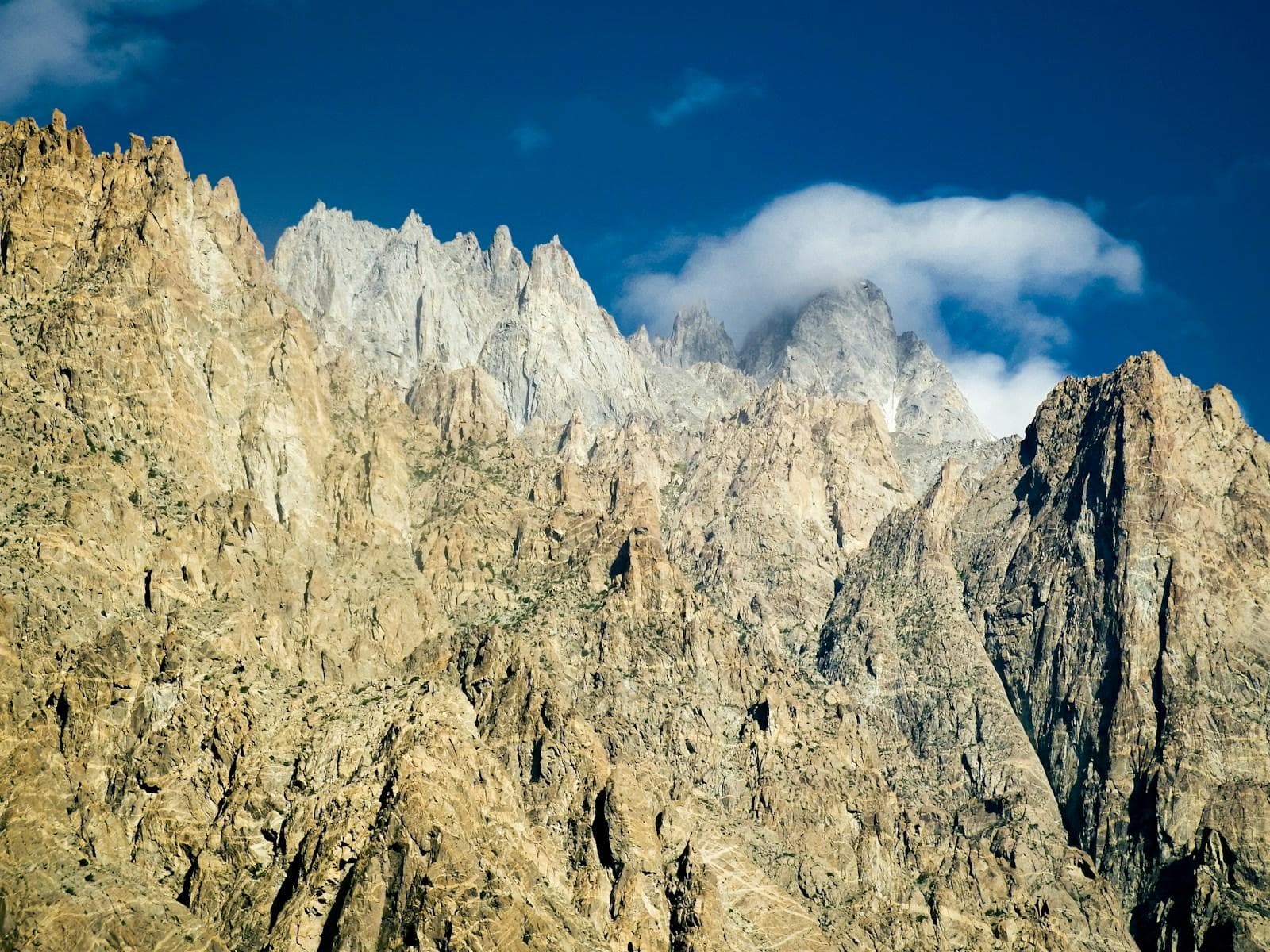
Gilgit-Baltistan is a semi-autonomous territory in the far north of Pakistan, bordering China, Afghanistan, and the Indian-administered territories. It contains the largest concentration of high mountains outside the polar regions: four of the world's eight-thousanders (K2, Broad Peak, Gasherbrum I, Gasherbrum II) and hundreds of peaks above 7,000 metres. For travellers, it is one of the world's most compelling destinations.
The two main regions
Gilgit Division sits along the Karakoram Highway and includes Hunza Valley: the most accessible and most visited part of GB. The KKH connects Islamabad to Hunza by road in 14 to 16 hours, making Hunza reachable without a flight. The valley is green and cultivated, with terraced farms, ancient forts, and iconic mountain viewpoints.
Baltistan is the eastern region, centred on Skardu at the confluence of the Indus and Shigar rivers. Baltistan requires a flight (45 minutes from Islamabad) or a longer road journey via Gilgit. It is more remote and, many argue, more dramatic than Hunza: the cold desert, Deosai plateau, Shigar Fort, and Khaplu Palace are among the finest experiences in the region. The gateway to K2 and the Baltoro Glacier is from Skardu.
Planning a trip to Skardu?
Private 4×4, boutique hotels, and a day-by-day itinerary built around what you want to see.
Free PDF with the daily breakdown, hotels, costs, and the routes we use. No spam. Unsubscribe in one click.
Key destinations
Hunza Valley: Baltit Fort, Attabad Lake, Eagle's Nest viewpoint, Rakaposhi, Passu Cones. The most accessible area in GB and the one with the best developed tourism infrastructure. The apricot blossom in April is one of Pakistan's most photographed natural events.
Skardu: The capital of Baltistan. Gateway to Deosai National Park, Shigar Valley, Khaplu, and the K2 trekking routes. Reached by a 45-minute flight from Islamabad (weather permitting) or a 12-14 hour drive.
Deosai National Park: One of the world's highest plateaus at 4,114m. Brown bears, wildflower meadows, and some of the finest stargazing in South Asia. Accessible June to October from Skardu.
Shigar Valley: Thirty minutes from Skardu. The Shigar Fort Palace (400-year-old heritage hotel), the Sarfaranga Cold Desert, and apricot orchards. One of the most photographed areas in GB.
Khaplu: Three hours east of Skardu in eastern Baltistan. The Khaplu Palace heritage hotel, the Hushe Valley approach to K6 and K7, and almost no tourists. The most underrated destination in the region.
When to visit
The main season is June through October. All roads are open, including Deosai, and temperatures are comfortable throughout the region. September and October are Raahi's strongest recommendation: fewer tourists, harvest season, autumn colours, and Deosai still accessible through mid-October.
April is Hunza's blossom season: one of the best times to visit the valley but not Baltistan (Deosai is still closed, some Skardu roads are weather-dependent).
November through March: accessible in Hunza and Skardu city, but most attractions are at low ebb. For experienced winter travellers only.
For a full seasonal breakdown, see our month-by-month guide or the dedicated best time to visit Gilgit-Baltistan guide.
How to get there
To Hunza: Drive from Islamabad via the Karakoram Highway (14-16 hours, 600km) or fly to Gilgit (45 minutes) and drive to Hunza (1 hour). The drive is one of the great mountain road journeys; the flight is convenient but misses the scenery.
To Skardu: Fly from Islamabad (45 minutes, daily PIA, weather-dependent) or drive via the KKH and Indus Highway (20+ hours). Most travellers fly. Build in a buffer day for weather cancellations. See our Skardu flights guide for full details.
How long do you need?
A week covers one region well: either 7 nights in Baltistan (Skardu, Shigar, Deosai, Khaplu) or 5-7 nights in Hunza and the surrounding area. Ten days allows you to do both: fly into Skardu, cover Baltistan, drive to Hunza, exit via the KKH.
For most first-time visitors we recommend starting with Baltistan: it is slightly more remote, more diverse in its landscapes, and less tourist-worn than Hunza in peak season. Hunza is a natural second trip or extension.
Is it safe?
Yes. Gilgit-Baltistan is the safest region in Pakistan for foreign tourists, by a significant margin. The security concerns that generate travel advisories for Pakistan do not apply here. The real risks are environmental: mountain weather, altitude, rough roads. All are manageable with a knowledgeable local operator. See our full GB safety guide.
Planning with Raahi
Raahi runs private tours throughout GB year-round. Our itineraries cover everything from a 3-day Skardu introduction to a 10-day Baltistan-to-Hunza crossing. All tours include private Land Cruiser transport, hotel bookings, and itineraries built around your specific dates and pace. Get in touch to plan your Gilgit-Baltistan trip.
Frequently Asked Questions
What is Gilgit-Baltistan?
Gilgit-Baltistan is a semi-autonomous territory in the far north of Pakistan, bordering China, Afghanistan, and the Indian-administered territories. It contains four of the world's eight-thousanders (K2, Broad Peak, Gasherbrum I, Gasherbrum II) and hundreds of peaks above 7,000 metres. It has two main regions: Gilgit Division (including Hunza Valley, reached via the Karakoram Highway) and Baltistan (centred on Skardu, the gateway to Deosai, Shigar, Khaplu, and K2).
How do I get to Skardu?
By air from Islamabad: 45 minutes on PIA, daily services, but weather-dependent, fog in Islamabad or cloud cover in Skardu grounds the flight without warning. Always build one buffer day at each end. By road via the Karakoram Highway and Gilgit: 20 to 24 hours, usually split overnight at Besham or Chilas. See our Skardu flights guide for how to handle cancellations.
How many days do you need in Skardu?
Five to seven days covers the full region: Kharpocho Fort, the Kachura Lakes, Shigar Valley, Deosai National Park, and Khaplu. Three days covers the core circuit without Khaplu. If you are combining with Hunza, plan 10 to 12 days total. See our 5-day Skardu itinerary for the day-by-day breakdown.
What should I not miss in Skardu?
Deosai National Park: the second-highest plateau in the world at 4,114 metres, open mid-June to mid-October. Kharpocho Fort: the best free panorama in the valley. Shigar Fort Palace: one of Pakistan's finest heritage buildings. The Kachura Lakes. For the full list, see our things to do in Skardu guide.
Is Skardu safe to visit?
Yes. Gilgit-Baltistan is consistently the safest region in Pakistan for foreign tourists. The security concerns that generate travel advisories for Pakistan do not apply here. The real risks are environmental: weather-dependent flights, rough mountain roads, and altitude at Deosai. All are manageable with an experienced local operator.