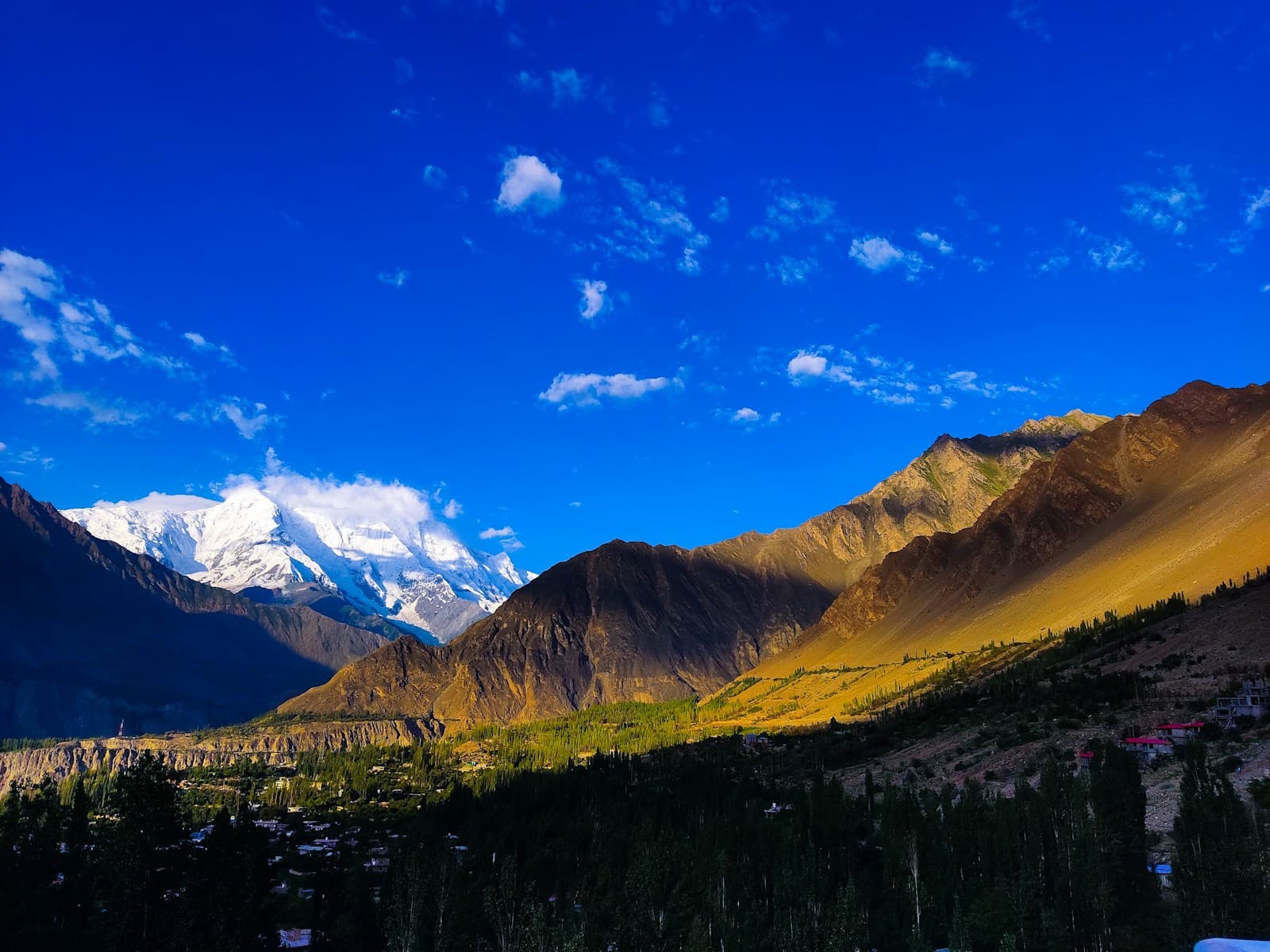
Hunza Valley in winter is a different place from the summer and autumn versions that most visitors know. Between January and March, the apricot orchards are bare, the poplar trees are stripped of leaves, and the higher passes have closed for the season. The Karakoram Highway itself remains open to Karimabad and beyond, but some side roads and upper valley routes require 4x4 or are impassable.
A winter visit to Hunza is not for everyone, the main tourist infrastructure is reduced and several guesthouses close for the season. But for travellers willing to visit in the cold and quiet, there are things about winter Hunza that the summer months cannot offer: snow on the peaks at closer range, empty streets, and the extraordinary clarity of winter mountain light.
Weather by Month: January, February, March
January is the coldest month in Karimabad. Daytime temperatures typically range from -2°C to 8°C at valley floor level (2,400m). Night temperatures regularly drop to -10°C to -15°C. Snow falls on the valley floor in January, usually 2 to 4 snowfall events per month, though the snow typically melts within days at this elevation. The peaks above are deeply snow-covered.
Planning a trip to Hunza?
Rakaposhi, Attabad Lake, Baltit Fort, Raahi plans it privately, at the pace you want.
Free PDF with the daily breakdown, hotels, costs, and the routes we use. No spam. Unsubscribe in one click.
February is similar to January but with slightly longer daylight hours. Some years see the coldest overnight temperatures of the year in February. The dry season means clear mountain views are common, more frequent clear days than the cloudy summer. The apricot trees are dormant but the mountain backdrop is at its most dramatic with fresh snow cover.
March is the transition month. Temperatures climb: daytime highs reach 12 to 18°C by late March, with nights still cold (0 to 5°C). The cherry blossom in some lower orchards begins in the last 10 to 15 days of March, not the full apricot display (that comes in April) but the first colour of the year. By the last week of March, Hunza Valley begins to wake up. This is a genuinely interesting shoulder-season window.
Road Conditions in Winter
The main Karakoram Highway to Karimabad is kept clear of snow by PKHA road maintenance crews and is passable by standard vehicles throughout winter, with the exception of occasional brief closures during heavy snowfall events (usually cleared within 12 to 24 hours). The KKH to Gilgit and from Gilgit south toward Islamabad is similarly maintained.
Upper Hunza beyond Gulmit becomes more challenging in winter, the road to Passu and Sost is passable but requires more caution and ideally a 4x4. The road to Khunjerab Pass closes by November and does not reopen until May 1. Eagle's Nest and Duikar Hill above Karimabad may be icy or snowbound in January and February, a 4x4 with chains is required if conditions are bad.
What Is Open in Winter
Several hotels and guesthouses in Karimabad remain open year-round. The Serena Hunza and a handful of well-established mid-range properties typically stay open. The bazaar in Karimabad operates through winter, though with reduced hours. Most restaurants serving standard meals remain open.
What closes: many seasonal guesthouses shut from November to March. Some upper-valley properties (Passu, Gulmit) close completely. The Baltit Fort museum may have reduced winter hours or close on weekdays, confirm before visiting. Attabad Lake boat operators typically do not run in winter; the lake is accessible but kayaking is not offered.
Why Visit Hunza in Winter
The mountain views are the primary reason. In summer and early autumn, valley haze, generated by heat and moisture, reduces long-distance visibility. In winter, the atmosphere is dry and the peaks are crystalline. Rakaposhi from Ghulmet viewpoint in January, with fresh snow at mid-mountain level, is a different and arguably more dramatic view than the same mountain in July.
The complete absence of other tourists is also a genuine draw for some visitors. In winter, the Eagle's Nest at sunrise has no one else at the viewpoint. The lanes through Altit old town in early morning are empty. The bazaar is local, not tourist. If you want to understand what daily life in Karimabad looks like without the filter of peak-season tourism, winter is the time.
Photography is exceptional in good winter conditions. Snow on the peaks, frost on the orchard branches, clear air, and soft low-angle winter light. The golden hour in January is around 4:30 to 5:30pm, shorter than summer but intense. See the photography guide to Hunza for specific viewpoints that perform well in winter light.
What to Pack for Winter Hunza
January and February in Karimabad require serious cold-weather gear. At -10°C overnight, a down jacket is essential, not optional. Bring: a good down jacket (rated to -15°C), thermal base layers (top and bottom), fleece midlayer, waterproof outer shell, warm hat and gloves, and insulated footwear. Valley roads are slushy rather than icy at midday, but the higher viewpoints (Eagle's Nest, Ultar Meadows approach) can have packed ice.
March requires less extreme layering but mornings and evenings are still cold. A puffy jacket, fleece, and waterproof outer shell covers most conditions.
March: The Transition Window
Late March is arguably the most interesting time for a winter visit to Hunza. The harsh cold has lifted, daytime temperatures are pleasant (12 to 18°C), and the first cherry blossom appears in the lower orchards around the last week of March in typical years. This gives the landscape colour and life while it is still quiet and off-season.
The cherry blossom is a precursor to the full apricot blossom that follows in April. It is not as dramatic or as photographed, but it is genuinely beautiful and entirely un-crowded. March is also when accommodation prices are at their lowest and options are most available at short notice.
Combining Winter Hunza with Islamabad or Lahore
A winter Hunza trip works well as a short add-on to a broader Pakistan itinerary. Fly into Islamabad, drive to Karimabad in one day (or overnight at Besham), spend 3 to 4 nights in Hunza, and fly back from Gilgit. The return journey by road via the KKH in reverse is equally straightforward.
Raahi operates private trips to Hunza in winter. If you want 4x4 transport, accommodation in an open property, and a guide who knows the current road and weather conditions, contact us. See the Hunza hotels guide for properties that stay open in winter and the best time to visit Gilgit-Baltistan for the full seasonal picture.
Frequently Asked Questions
Is it worth visiting Hunza in winter (January or February)?
For travellers who specifically want mountain clarity, complete solitude, and a stark winter landscape, yes. Winter Hunza has exceptional mountain views with no haze, the valley is quiet, and photography in winter light is excellent. For a classic Hunza experience with green orchards, warm weather, and all activities open, June to October is the better window.
Is the road to Hunza open in January?
The Karakoram Highway to Karimabad is generally open year-round, maintained by road crews through winter. Brief closures of 12 to 24 hours can occur after heavy snowfall but are resolved quickly. The road beyond Gulmit toward Passu and Khunjerab is less reliably clear; the Khunjerab Pass itself is closed from November to May.
Are hotels open in Hunza in winter?
Several properties stay open year-round, including Serena Hunza and a number of established guesthouses in Karimabad. Many seasonal guesthouses close from November to March. It is advisable to confirm availability before booking, particularly for January and February. By late March, more properties begin opening for the approaching blossom season.
When does cherry blossom start in Hunza?
Cherry blossom in Hunza's lower orchards typically starts in the last 10 to 15 days of March, depending on temperature. It is a precursor to the full apricot blossom that follows in mid-to-late April. The cherry blossom is subtle compared to the apricot display but marks the transition from winter to spring. The full apricot blossom guide covers the April peak in detail.
What temperature should I expect in Hunza in January?
Daytime highs in Karimabad (2,400m) range from -2°C to 8°C in January. Nights regularly drop to -10°C to -15°C. Snow falls on the valley floor but typically melts within a few days. The peaks above are heavily snow-covered. Bring a down jacket rated to -15°C and thermal layers.