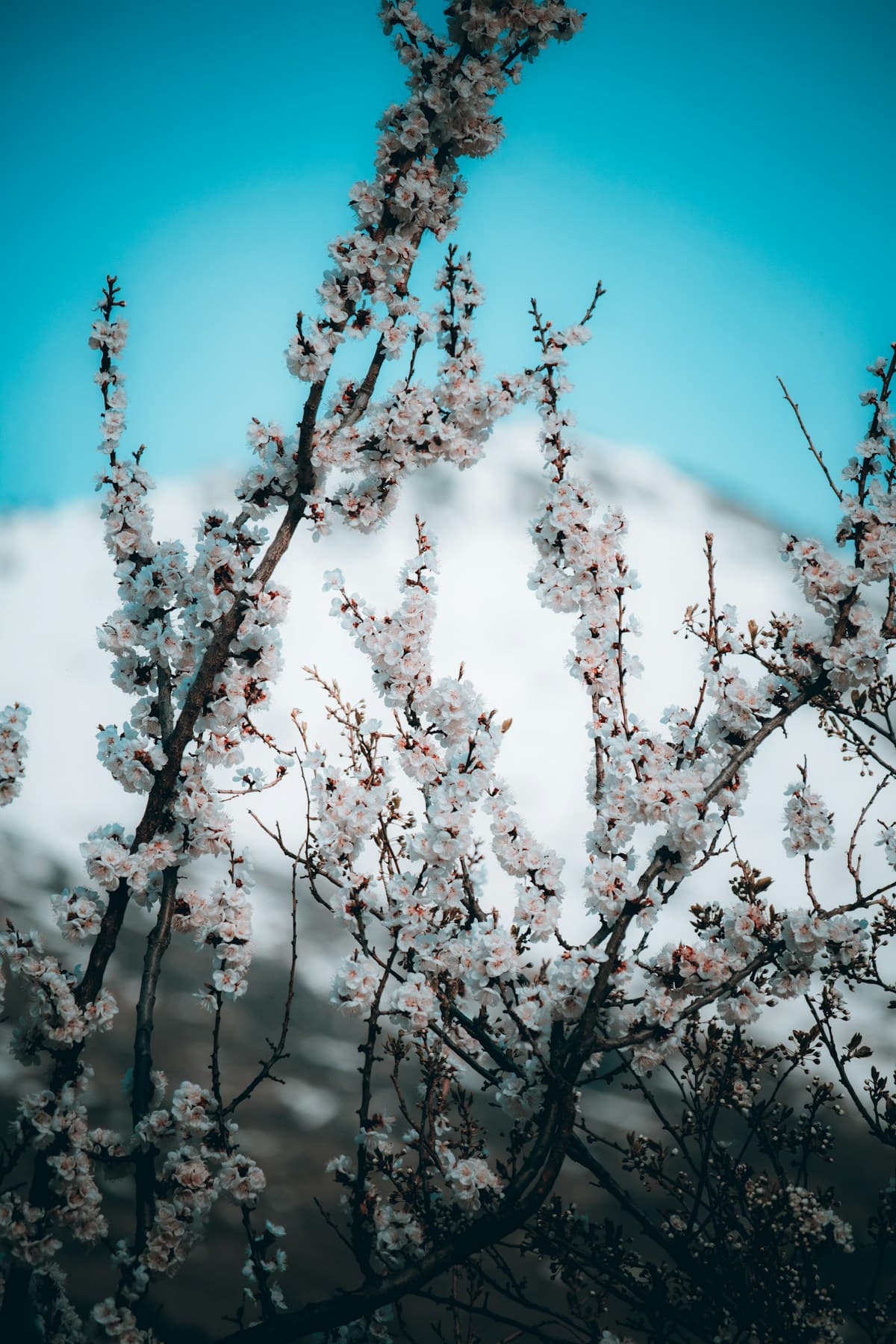
Every April, the terraced orchards of Hunza Valley flower white and pink for two to three weeks. The apricot trees, which line the fields below Baltit Fort, run along the lanes of Altit village, and cover the slopes above Karimabad, bloom before the leaves come. For that window, the valley looks unlike anywhere else in Pakistan.
This is not a formal festival with a fixed date. It is a natural event, and the timing shifts by up to two weeks depending on the winter snowfall, the spring temperature, and the elevation of the specific orchard. Understanding how blossom works in Hunza makes the difference between arriving at peak colour and arriving a week after it fades.
When Does Apricot Blossom Peak in Hunza?
The typical window is between April 10 and April 30, with the peak usually falling in the third week of April. Lower elevation orchards (around Altit, below Karimabad) flower first. Higher orchards and the Gulmit area in upper Hunza flower up to two weeks later. In warm years, blossom starts in early April. In cold years with late snowmelt, it can push into early May.
Planning a trip to Hunza?
Rakaposhi, Attabad Lake, Baltit Fort, Raahi plans it privately, at the pace you want.
Free PDF with the daily breakdown, hotels, costs, and the routes we use. No spam. Unsubscribe in one click.
The safest strategy is to plan your trip around April 15 to 25 and build one or two days of flexibility on either side. Raahi monitors conditions from late March onward and can advise on the current state. If you are coming specifically for blossom and have firm flights, we recommend arriving April 14 to 15 to catch the opening, or April 22 to 24 to catch the peak before it drops.
Cherry blossom also occurs in some Hunza orchards, typically one to two weeks before the apricot, so the first week of April can offer cherry blossom colour even if apricot trees are not yet open.
Where to See It: Best Locations
The most photographed blossom location is directly below Baltit Fort: the old terrace orchards above Karimabad give a view of blossom in the foreground with the fort above and Rakaposhi (7,788m) in the background. This is the defining Hunza image and it is as good in person as the photographs suggest.
For a different perspective, walk down from Karimabad toward Altit Fort through the orchard lanes. The lower path passes directly through the trees rather than above them. At ground level during peak blossom, the combination of flower canopy and the old stone walls of Altit village is exceptional.
Gulmit, in upper Hunza near Attabad Lake, blooms later and is less visited. If you are making the drive north to Passu or Khunjerab, stop at Gulmit around April 25 to May 5 for blossom that most visitors miss.
The lanes above Karimabad old town, heading toward the Eagle's Nest, pass through private orchard land where the blossom is closest and most immersive. Ask your hotel about walking access; most can arrange it.
Photography: Light, Timing, and Technique
The best light for blossom photography falls in two windows: one hour after sunrise (typically 6:30 to 8am in April) and the two hours before sunset (5 to 7pm). In morning light, the white blossom glows against the dark mountain mass behind. At golden hour, the warm apricot tones of the light hit the valley while the peaks above are still in cool shadow, a contrast that works particularly well from the terraces above the fort.
Overcast days are underrated for blossom photography. Flat, diffused light renders the flower colour more accurately than direct sun, which can blow out the whites. If you have a day of overcast sky during your visit, use it.
A 50mm or 85mm lens at f/2.8 or wider gives the background blur that separates the blossom canopy from the mountain behind. Wide-angle lenses (16 to 24mm) work for landscape compositions that include foreground blossom and the full valley. Drone permits apply in the national park areas, confirm requirements before flying.
Accommodation: Book at Least 6 to 8 Weeks Ahead
Hunza accommodation fills completely during peak blossom week. This is the busiest period of the year in Karimabad, and both the boutique properties and the better guesthouses book out completely for April 18 to 25. The properties with direct views toward Baltit Fort, Old Hunza Inn, Serena Hunza, and several smaller guest houses on the upper terrace, are the first to fill.
If you want to be in Karimabad during blossom week, message us by late February. If you contact us in April without a booking, we will try, but the options will be limited. See the Hunza hotels guide for a full breakdown of where to stay and what each property offers.
What Else to Do During Blossom Week
Blossom season coincides with an unusually animated Karimabad. Local families are working in the orchards. The bazaar is stocked with early-season products. The roads are clear but not yet crowded with summer tourists. This is a genuinely good time to be in Hunza beyond just the blossom.
The Eagle's Nest sunrise during blossom week is outstanding: the valley below is white-pink with flowering orchards, Rakaposhi is lit from the east, and the air is clear and cold. A 4x4 and driver willing to leave by 5am is all it takes. The drive takes 30 to 40 minutes from Karimabad and the viewpoint is at 3,100m, bring a warm jacket, it is cold at dawn in April.
Attabad Lake at the end of April has smooth, calm water and good light. The turquoise is at its most saturated before summer haze arrives. Combine a blossom walk in Karimabad in the morning with a drive to Attabad in the afternoon.
Getting to Hunza for Blossom Season
The safest route is to fly from Islamabad to Gilgit and drive north on the Karakoram Highway, about two and a half hours from Gilgit to Karimabad. Gilgit airport operates more reliably than Skardu and is rarely cancelled due to weather in April. Check the 5-day Hunza itinerary for a full day-by-day plan that works around the blossom window, or see the best time to visit Gilgit-Baltistan guide for the wider seasonal picture.
Raahi can build a blossom-timed trip around your dates. Message us in the planning stage and we will advise on exact timing based on current conditions. Get in touch to start planning.
Frequently Asked Questions
When exactly does apricot blossom peak in Hunza?
Typically April 15 to April 25, though this varies by up to two weeks depending on winter snowfall and spring temperatures. Lower orchards (Altit, Karimabad) flower first; Gulmit and upper Hunza follow up to 10 days later. Raahi monitors conditions from late March and can advise on current status.
How long does apricot blossom last in Hunza?
Peak blossom lasts about two weeks at any given location. A warm spell can shorten it to 10 days; a cool spring stretches it to 16 to 18 days. The blossom sequence runs lower to higher elevation over 3 to 4 weeks total, so if you time your trip around Karimabad, you will also catch the tail end in Gulmit.
How far in advance should I book accommodation for blossom season?
Six to eight weeks minimum. The best properties in Karimabad with views toward Baltit Fort fill for April 18 to 25 well in advance. If you are planning to visit in peak blossom week, contact Raahi by late February to secure accommodation.
Is there an official Hunza blossom festival?
There is no single fixed-date festival, the blossom is a natural seasonal event. Some years local communities organise cultural events around blossom season, but these are informal and variable. The experience itself, the valley in flower with Rakaposhi in the background, does not require a festival to be worth the trip.
Can I combine blossom season with Skardu?
Skardu in April is cold and some roads are still snowbound. Deosai is inaccessible until June. If blossom is the primary goal, base yourself in Hunza and make a day trip to Gilgit. A Skardu visit is better combined in the June to October window, or by doing Hunza first and Skardu on a separate trip.