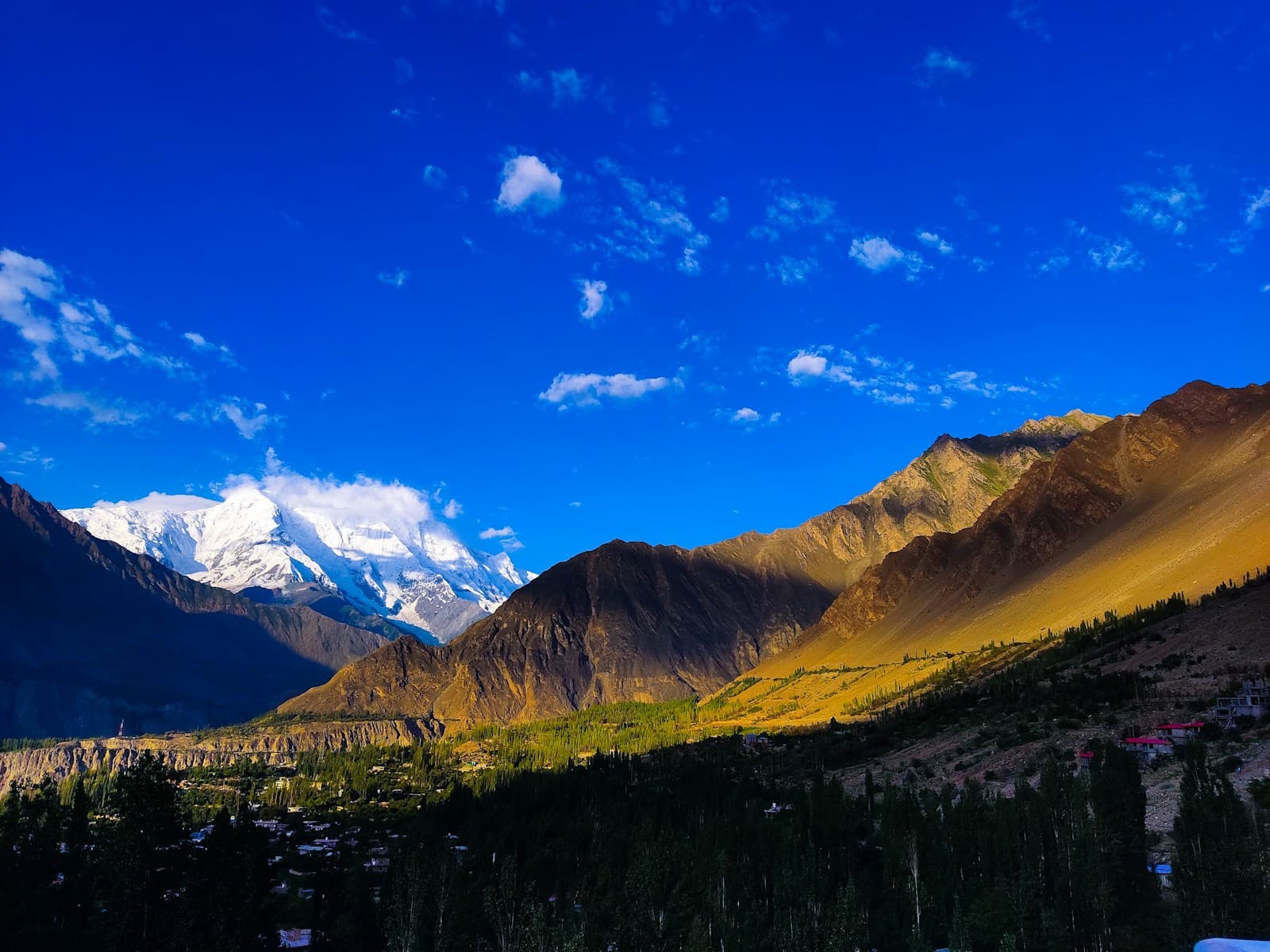
Three days in Hunza is short. A week is better, and five days, as covered in our 5-day Hunza itinerary, is the comfortable minimum for covering everything without rushing. But three days is a real constraint for a lot of travellers, and it is workable if you sequence it correctly and accept that some things will not fit. This is the itinerary we recommend for that constraint.
Is three days actually enough?
For the core Hunza experiences, Baltit Fort, Attabad Lake, Eagle's Nest viewpoint, and either Passu Cones or Altit Fort, yes. You will not have time for slow mornings or detours, but the essential Hunza will be there. What you lose with three days is depth: the old village walks, the apricot orchards, the bazaar, the upper valley. These are the things that make a longer Hunza stay feel different from a highlights tour. If you can add a fourth day, do it.
Day 1: Arrival, Eagle's Nest at sunset, Karimabad orientation
Arrive in Karimabad by early afternoon if flying to Gilgit (45-minute flight, then 1-hour drive) or mid-evening if driving from Islamabad (14 to 16 hours). If you arrive with daylight left, drive to Eagle's Nest at Duikar, 45 minutes up a rough road by 4x4. The sunset panorama from 3,200 metres, with Rakaposhi and Ultar Sar lit from the west, is one of the best first evenings you can have in Hunza. Return to Karimabad for dinner. If you arrive too late for the viewpoint, save Eagle's Nest for sunrise on Day 2 and spend the first evening walking the bazaar.
Planning a trip to Hunza?
Rakaposhi, Attabad Lake, Baltit Fort, Raahi plans it privately, at the pace you want.
Free PDF with the daily breakdown, hotels, costs, and the routes we use. No spam. Unsubscribe in one click.
Day 2: Baltit Fort, Altit Fort, and Attabad Lake
Early start. Baltit Fort opens at 9am, be there when it does. Two hours inside is the right allocation: the rooms, the watchtowers, the view across the valley from the roof. Come down and walk the 3 kilometres south through the old village lanes to Altit Fort. The walk passes through some of the most intact historical settlement in Hunza and is worth doing on foot even if the road shortcut is available. Altit is older, less crowded, and set above a more dramatic drop to the river gorge below. Lunch back in Karimabad or in Altit village.
After lunch, drive to Attabad Lake, 45 minutes from Karimabad on the Karakoram Highway. The turquoise water against raw rock walls is at its most vivid in afternoon light. Take a boat ride if time allows (30 to 45 minutes). Return to Karimabad by early evening. This is a full day; resist the temptation to add anything else.
Day 3: Passu Cones and departure
If you have a morning before leaving, drive north to Passu (1.5 hours from Karimabad). The Passu Cones, cathedral rock spires rising above the Karakoram Highway, appear suddenly around a bend and are one of the more arresting landscapes in Pakistan. Stop at the standard viewpoint, walk to the Hussaini Bridge if time allows (20 minutes each way), and drive back. You can make Gilgit airport for a midday or afternoon flight, or continue south on the KKH if driving.
If you have an early departure, use the morning for the Rakaposhi viewpoint near Minapin (1 hour south of Karimabad on the way to Gilgit): the closest and clearest view of Rakaposhi's south face from road level. A 30-minute stop on the way out rather than a dedicated detour.
What to cut
In three days, skip: Khunjerab Pass (a full day each way from Karimabad, only worth it if you specifically need to say you were there); Shimshal Valley (requires at least a full day, better as its own trip); and the old apricot orchard walks (these need unhurried time to be worthwhile and three days doesn't have it). If the weather closes in and Eagle's Nest is not visible, don't chase it, use the time for the forts instead and accept the viewpoint as a reason to return.
Where to stay
Base in Karimabad for all three nights. The fort and village walks are on foot from here; Attabad and Passu are day trips. One night at Eagle's Nest guesthouse (in place of one Karimabad night) is worth it for the sunrise view, but only if availability allows, it books out fast in peak season.
Getting the most from three days
Three days in Hunza works best with a private vehicle and driver, the sequencing above requires flexibility in timing that shared transport doesn't give you. All Raahi Hunza tours are fully private. Our Do Wadiyan (9-day) and Sukoon Retreat (5-day) tours both include Hunza with more time. If three days is genuinely your window, tell us your dates and we will structure it around them.
Frequently Asked Questions
What are the must-dos in Hunza in just 3 days?
Eagle's Nest at sunrise (Day 1 or early Day 2, non-negotiable if you have any morning flexibility), Baltit Fort and Altit Fort on Day 2, and Attabad Lake combined with either Passu Cones or the Rakaposhi viewpoint near Minapin on Day 3. These are the visual anchors of a Hunza trip.
What should I skip in Hunza if I only have 3 days?
The Gulmit Museum in upper Hunza, the Borith Lake walk, and a dedicated Passu day, these require a 4th or 5th day to do properly. In 3 days, concentrate on the visual anchors: Eagle's Nest, Baltit Fort, Attabad Lake. The 5-day Hunza itinerary shows what opens up with 2 extra days.
Is it worth extending a 3-day Hunza trip to 5 days?
Yes, if you can. Three days covers the highlights but without depth. A fourth day adds upper Hunza, Passu Cones and Hussaini Bridge as a proper destination rather than a rushed stop. A fifth adds Borith Lake or slow time in the old village lanes and orchards. The experience of Hunza at an unhurried pace is qualitatively different from a highlights tour.